how dopamine works

Dopamine is one of the brain’s most important chemical messengers, but its role is often misunderstood. It is commonly described as the brain’s “pleasure chemical,” yet dopamine does much more than create pleasurable feelings. It helps regulate movement, motivation, attention, learning, decision-making, and the way the brain responds to rewards and expectations. Understanding how dopamine works provides a clearer picture of why certain experiences feel motivating, why habits can become powerful, and how the nervous system coordinates both physical and mental activity.
The question of how dopamine works is best answered by looking at several processes together: where dopamine is produced, how it is released between nerve cells, how dopamine receptors interpret its signal, and how different brain pathways use it for different purposes. Rather than functioning as a simple on-or-off switch, dopamine acts as a sophisticated signaling system whose effects depend on the brain region, receptor type, timing, and context.
What Is Dopamine?
Dopamine is a neurotransmitter, meaning it is one of the chemicals neurons use to communicate with other cells. It belongs to a group of compounds called catecholamines and is produced from the amino acid tyrosine through a series of biochemical steps. Dopamine can function as a neurotransmitter in the nervous system and also has hormone-related functions in the body.
Dopamine is produced by specialized neurons in several areas of the brain, including important groups of cells in the midbrain. These neurons send projections to different regions, creating pathways with distinct functions. This organization is one reason it is inaccurate to talk about dopamine as though it performs one single job throughout the brain.
The effects of dopamine depend partly on where it is released and which receptors receive the signal. Dopamine receptors are found throughout the central nervous system, and the five major receptor types—D1, D2, D3, D4, and D5—belong to two broad receptor families with different intracellular signaling effects.
How Dopamine Is Made and Released
Dopamine production begins with tyrosine, an amino acid obtained through diet and also produced naturally by the body. Tyrosine is converted into L-DOPA, which is then converted into dopamine inside specialized neurons. Once dopamine is produced, it can be stored in small structures called vesicles until the neuron receives a signal to release it.
When an electrical signal reaches the end of a dopamine-producing neuron, dopamine can be released into the space between neurons, known as the synaptic cleft. The dopamine molecules then interact with receptors on neighboring cells. This brief chemical message can alter the activity of the receiving neuron and influence larger neural circuits.
Dopamine signaling does not simply continue indefinitely after release. The brain has mechanisms for clearing and regulating dopamine, including reuptake through dopamine transporters and breakdown through metabolic pathways. This rapid regulation allows dopamine signals to be precisely timed and prevents a short neural message from remaining active indefinitely.
How Dopamine Receptors Interpret the Signal
A critical part of understanding how dopamine works is recognizing that dopamine itself is only part of the communication process. Its effects depend on the receptors it activates. D1 and D5 receptors belong to one receptor family, while D2, D3, and D4 belong to another. These receptor groups influence intracellular signaling in different ways.
Dopamine receptors are distributed differently across brain regions, which means the same neurotransmitter can contribute to different functions depending on where it acts. Dopamine signaling in circuits involved in movement is not identical to dopamine signaling in circuits involved in motivation or learning.
This receptor diversity also explains why simply talking about “high dopamine” or “low dopamine” can be misleading. Brain function depends on timing, location, receptor sensitivity, neural connections, and interactions with many other neurotransmitter systems. Dopamine is part of a network rather than an isolated chemical control system.
Dopamine and the Brain’s Reward System
Dopamine is strongly associated with reward-related behavior, but describing it as a chemical that simply makes people feel pleasure is an oversimplification. Research has shown that dopamine is particularly important for learning about rewards, anticipating them, assigning motivational significance to cues, and influencing behavior directed toward valuable outcomes.
For example, imagine that you discover a new food you enjoy. The experience itself can be rewarding, but over time the brain can also learn that the smell of the food, the location where you usually eat it, or the sight of its packaging predicts an enjoyable experience. Dopamine activity can become associated with those predictive cues, helping the brain learn what is worth approaching.
This distinction between pleasure and motivation is important. A person may strongly desire something because cues associated with it have acquired motivational value, even though the actual pleasure obtained from the experience is not necessarily increasing. Dopamine therefore participates in the processes that encourage seeking, learning, and goal-directed behavior rather than simply generating happiness.
Dopamine and Reward Prediction
One of the most influential concepts in dopamine research is reward prediction error. In simplified terms, the brain can compare what happened with what it expected to happen. Dopamine neurons can show changes in activity when an outcome is better or worse than predicted, helping the brain update its expectations.
Suppose you expect to receive a small reward but unexpectedly receive a larger one. The difference between expectation and outcome can generate a dopamine-related prediction-error signal. If an expected reward fails to appear, dopamine activity can change in the opposite direction. With repeated experience, the signal can shift toward cues that predict the reward.
This mechanism helps explain why dopamine is closely connected to learning. The brain is continually updating its expectations about which actions, environments, and signals are associated with valuable outcomes. Modern research also emphasizes that dopamine signaling is more complex than a single prediction-error calculation and can reflect context, choice, attention, and other factors.
Dopamine and Motivation
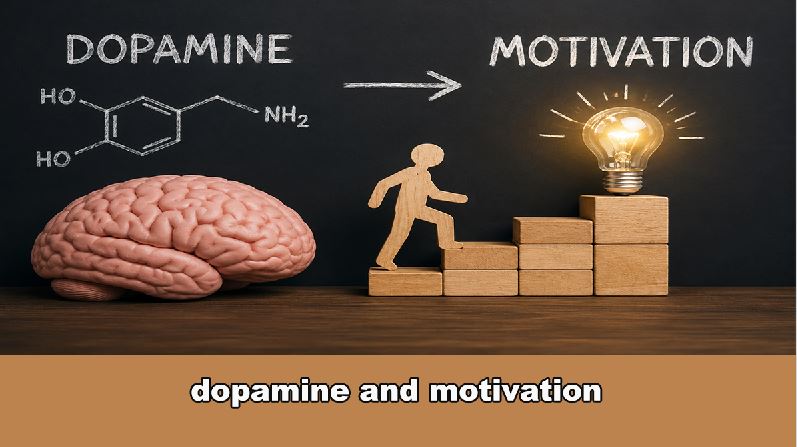
Motivation is another major function associated with dopamine. If something is perceived as valuable or important, dopamine-related circuits can contribute to the willingness to invest effort in pursuing it.
Consider studying for an important exam, exercising toward a fitness goal, or working on a long-term project. The final reward may be far in the future, yet the brain has to evaluate whether the effort required in the present is worthwhile. Dopamine-related circuits participate in these processes involving value, effort, learning, and goal-directed behavior.
This is why saying that dopamine is merely about pleasure misses an important part of its role. Dopamine can be involved before a reward is obtained, helping shape the behaviors that lead toward expected outcomes.
Dopamine and Movement
Dopamine also has an essential role in controlling movement. A major dopamine pathway extends from the substantia nigra in the midbrain to structures of the basal ganglia involved in motor control. This pathway is known as the nigrostriatal pathway.
Within the basal ganglia, dopamine influences neural circuits that help regulate the initiation and control of movement. Dopamine acts through different receptor populations, including D1- and D2-family receptors, to modulate these circuits in distinct ways.
The importance of this pathway becomes particularly apparent in Parkinson’s disease, in which degeneration of dopamine-producing neurons in the substantia nigra contributes to characteristic movement difficulties. Dopamine-related movement disorders demonstrate that dopamine is not simply about mood or reward; it is also fundamental to motor control.
Dopamine and Attention and Learning
Dopamine interacts with brain systems involved in attention, cognition, and learning. Receptor signaling can influence how strongly certain information or experiences affect neural circuits.
When something is surprising, important, or potentially rewarding, dopamine-related activity can help the brain prioritize information and update learned associations. This does not mean dopamine simply increases concentration in every situation. Its effects depend on the neural circuit, the type of activity, and the context.
The relationship between dopamine and learning is particularly important because effective behavior requires the brain to distinguish useful information from background information. Dopamine-related signaling contributes to this broader process of updating and adapting behavior based on experience.
The Major Dopamine Pathways
The brain contains several major dopamine pathways, and each is associated with somewhat different functions. The mesolimbic pathway connects midbrain dopamine neurons with parts of the limbic system, including the nucleus accumbens, and is strongly involved in reward, motivation, and reinforcement.
The mesocortical pathway involves projections toward regions of the cerebral cortex and is associated with functions such as cognition, attention, and goal-directed behavior. The nigrostriatal pathway is particularly important for motor control, while the tuberoinfundibular pathway participates in hormonal regulation, including the control of prolactin release.
These pathways demonstrate why dopamine should not be viewed as a single system with one universal effect. Different dopamine-producing neurons connect to different brain regions, and those networks perform different jobs.
Dopamine and Habit Formation
Dopamine can contribute to the development of learned behaviors by helping the brain connect actions and environmental cues with outcomes. When an action repeatedly produces a rewarding or valuable result, neural circuits can strengthen the associations involved in that behavior.
Over time, a behavior may become increasingly automatic. Environmental cues can begin to trigger motivation or action even before a reward occurs. Research on addiction, for example, has shown that dopamine responses can become strongly associated with cues that predict rewards, contributing to powerful motivational urges.
This does not mean dopamine alone creates habits. Habit formation involves interactions among multiple brain regions and neurotransmitter systems. Dopamine is better understood as one component of a larger learning and reinforcement network.
Dopamine and Addiction
Addictive substances and behaviors can influence the brain’s reward and motivation systems, including dopamine signaling. Repeated exposure can change how neural circuits respond to rewards and reward-associated cues.
One important feature of addiction research is the distinction between the actual rewarding experience and the motivational pull of cues associated with that experience. Dopamine-related signaling can contribute to incentive salience, in which previously neutral people, places, objects, or situations become powerful triggers for seeking a reward.
This helps explain why addiction cannot be understood simply as a matter of willpower or as having “too much dopamine.” Long-term changes involve complex adaptations across neural circuits, behavior, learning, and environmental context.
Why “Dopamine Detox” Is Misleading
The phrase “dopamine detox” is widely used to describe periods of avoiding highly stimulating activities such as social media, gaming, or entertainment. However, the brain does not literally need to be cleansed of dopamine, and avoiding ordinary rewarding activities does not reset dopamine to a special baseline.
Dopamine is necessary for normal functions including movement, learning, motivation, and hormonal regulation. Completely eliminating dopamine would not be healthy or possible through an ordinary lifestyle intervention.
A more useful approach is to examine behavior rather than trying to “detox” a neurotransmitter. Reducing compulsive phone use, creating periods without digital distractions, setting boundaries around entertainment, and developing healthier routines can be useful behavioral strategies without relying on inaccurate ideas about chemically resetting the brain.
How Daily Habits Influence Dopamine Function
Because dopamine is involved in motivation and learning, everyday experiences can influence dopamine-related circuits. Physical activity, sleep, social interaction, learning, food, and rewarding experiences all interact with the nervous system in complex ways.
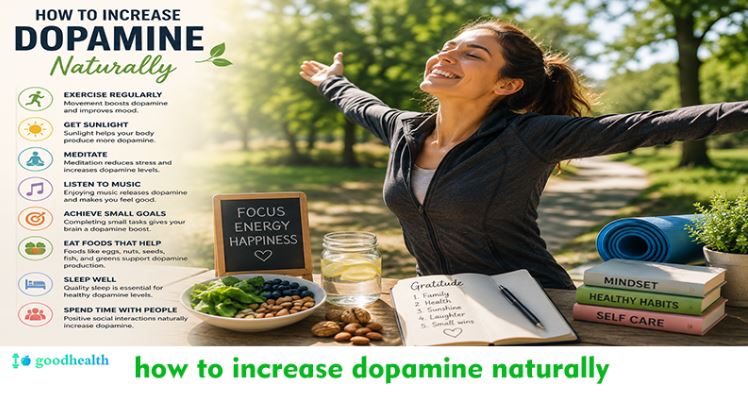
Instead of focusing on quick ways to “boost dopamine,” it is generally more useful to build habits that support overall brain health. Regular physical activity, sufficient sleep, nutritious eating, meaningful social connection, productive goals, and appropriate stress management contribute to a healthy environment for the brain.
There is no single food, supplement, or activity that can optimize dopamine for everyone. Dopamine signaling is tightly regulated by the nervous system, and artificially attempting to manipulate it can have unpredictable consequences.
Dopamine Is Different From Serotonin
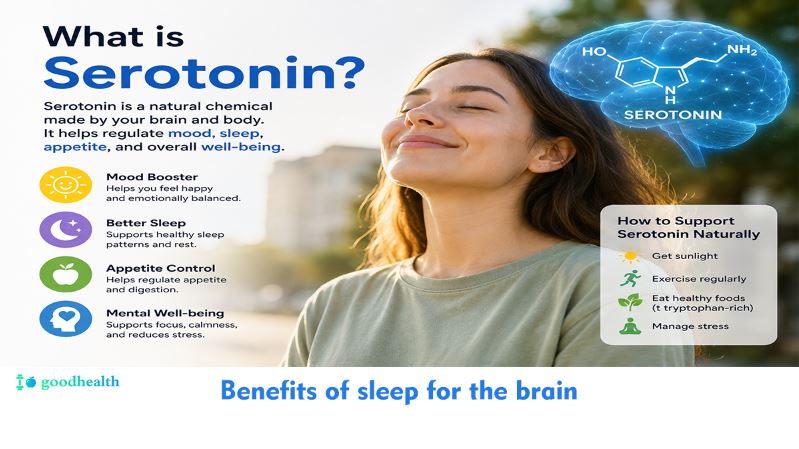
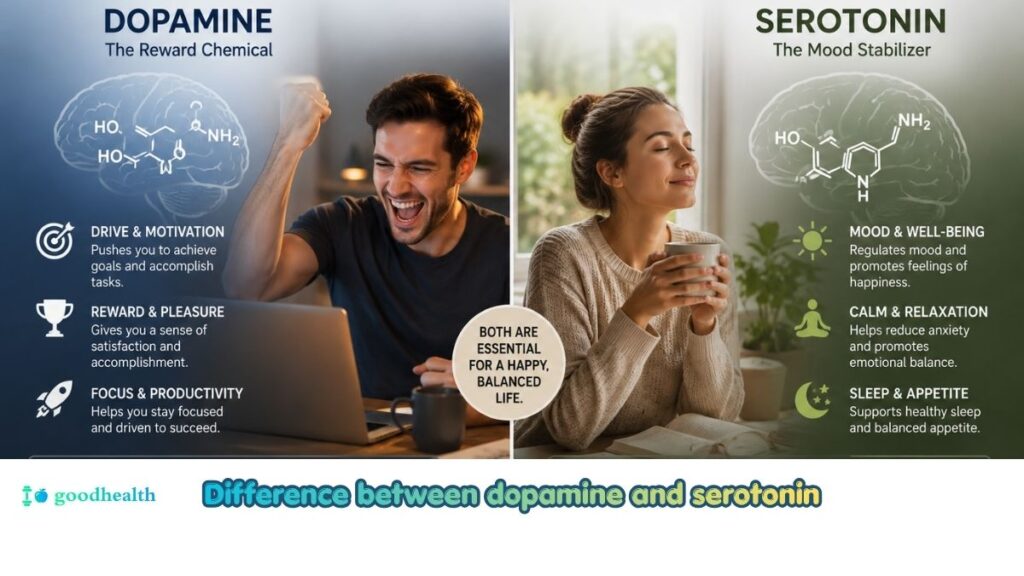
Dopamine and serotonin are both neurotransmitters, but they have different distributions, receptors, pathways, and functions. Dopamine is strongly involved in movement, motivation, reward learning, and several cognitive processes, while serotonin participates in many functions including mood regulation, sleep, appetite, and other physiological processes.
The popular idea that dopamine equals motivation and serotonin equals happiness is far too simple. Both neurotransmitters operate across multiple circuits and influence many processes.
Understanding these differences is useful because it prevents common misunderstandings about brain chemistry. Human behavior and emotions emerge from interactions among numerous brain systems rather than from a single neurotransmitter acting alone.
What Happens When Dopamine Signaling Is Disrupted?
Because dopamine participates in several essential functions, disruptions in dopamine signaling can be associated with different neurological and psychiatric conditions. The specific effects depend on which neurons, pathways, or receptors are affected.
Too little dopamine activity in certain motor pathways is associated with the movement problems seen in Parkinson’s disease. Other disorders and medications can influence dopamine receptors or dopamine signaling in different ways. Some medications intentionally target dopamine systems to alter symptoms associated with particular medical conditions.
It is important not to interpret everyday changes in motivation or mood as proof of a dopamine deficiency. Feeling tired, distracted, unmotivated, or bored can have many possible causes. Persistent or severe symptoms should be evaluated based on the person’s broader health and circumstances rather than attributed automatically to one neurotransmitter.
How to Support Healthy Dopamine Function
Supporting brain health does not require attempting to manipulate dopamine directly. A consistent lifestyle that supports the nervous system is a more practical approach. Regular physical activity, sufficient sleep, nutritious food, learning, social connection, and manageable levels of stress can all contribute to overall neurological well-being.
Goal-setting can also make use of the brain’s natural learning and motivation systems. Breaking a large objective into smaller achievements can provide regular opportunities to receive feedback and recognize progress. This approach can make long-term goals feel more manageable without relying on artificial stimulation.
It is also useful to pay attention to highly repetitive behaviors that interfere with everyday responsibilities. Excessive engagement with social media, gaming, gambling, or other rewarding activities can create strong cue-response patterns. Building reasonable boundaries and replacing unhelpful routines with meaningful alternatives can support healthier behavior.
Conclusion
Understanding how dopamine works requires moving beyond the idea that dopamine is simply a chemical responsible for pleasure. Dopamine is a complex neurotransmitter involved in movement, motivation, reward learning, attention, cognition, habit formation, and hormonal regulation. Its effects depend on the brain pathway, receptor type, timing, and context in which signaling occurs.
Dopamine helps the brain learn from outcomes, recognize important cues, regulate movement, and direct effort toward goals. It can contribute to the formation of powerful behavioral associations, but it does so as part of a much larger network rather than acting alone. This complexity is why simplistic claims about “raising,” “lowering,” or “detoxing” dopamine often fail to accurately describe neuroscience.
A better understanding of how dopamine works can lead to a more realistic view of motivation, habits, learning, and brain health. Rather than chasing quick dopamine boosts, focus on sustainable behaviors that support the brain as a whole: quality sleep, regular movement, nutritious food, meaningful goals, healthy relationships, and balanced use of highly stimulating activities. These foundations support the complex biological systems that allow dopamine and other neurotransmitters to perform their essential roles.
What does dopamine do in the brain?
Dopamine is a neurotransmitter that helps regulate motivation, reward, learning, movement, attention, and other important brain functions.
How does dopamine affect motivation and pleasure?
Dopamine mainly helps drive motivation and reinforces behaviors that the brain considers rewarding, rather than simply creating pleasure itself.
What causes dopamine to be released naturally?
Activities such as eating enjoyable food, exercising, achieving goals, social interaction, and learning new things can naturally influence dopamine release.
Can too much dopamine be harmful?
Dopamine is essential for healthy brain function, but abnormal dopamine activity or signaling can contribute to certain neurological and psychiatric conditions.
How can I support healthy dopamine levels naturally?
Regular exercise, adequate sleep, nutritious food, meaningful goals, social connection, and rewarding activities in moderation can support healthy dopamine function.
please note
The content provided in this article is for educational and informational purposes only and should not be construed as medical, nutritional, psychological, or therapeutic advice. The advice provided may not be appropriate for everyone. The final decision regarding your health and lifestyle is yours, and we recommend that you consult with your doctor, counselor, or other health professional before making any changes or taking any action.
Shop new arrivals
-

Emotional Advantage
€0.00 -

Healthy Life Blueprint
€0.00 -

How to break negative habits
€0.00 -
How to have continuity
Original price was: €4.90.€0.00Current price is: €0.00. -
Living with Purpose
Original price was: €8.90.€0.00Current price is: €0.00.