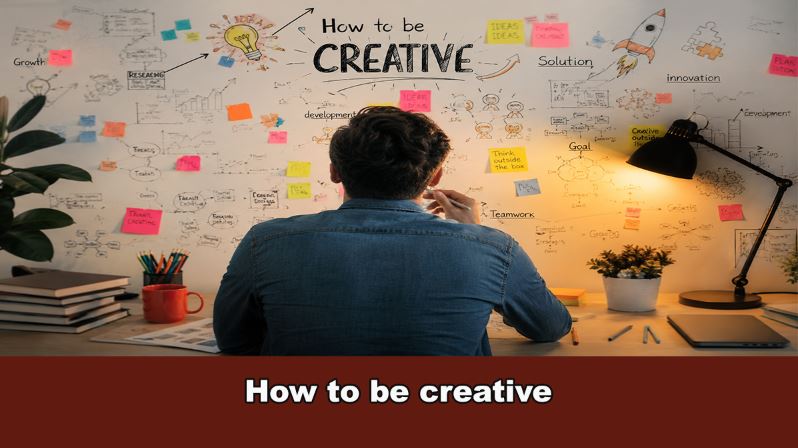
How to be creative

The pursuit of understanding how to be creative often begins with dismantling a pervasive cultural myth: the idea that innovation and originality are exclusive gifts bestowed upon a lucky few at birth. For decades, society has romanticized the concept of the solitary genius struck by sudden inspiration. However, modern cognitive science and the daily routines of prolific artists, writers, and entrepreneurs paint a vastly different picture. Creativity is not a static personality trait; it is a dynamic skill, a cognitive muscle that requires consistent conditioning, deliberate practice, and the right psychological environment to grow. Whether you are an entrepreneur looking to disrupt a market, a writer facing a blank page, or a professional aiming to solve complex logistical problems, unlocking your creative potential requires a fundamental shift in how you view the generation of ideas. By understanding the underlying mechanics of creative thought and implementing actionable daily strategies, anyone can learn to foster a more imaginative and innovative mindset.
Understanding the True Nature of Creativity
To fundamentally grasp how to be creative, we must first separate the biological reality of the brain from the romanticized notions of artistic genius. At its core, creativity is the process of forming novel and valuable connections between previously unrelated concepts. The human brain is essentially a massive pattern-recognition machine. It constantly takes in new information, categorizes it, and stores it alongside existing knowledge. Creative thinking occurs when the brain reaches across these established categories and bridges two disparate ideas to form something entirely new. This is why individuals who possess a vast and varied mental library of experiences and knowledge often seem to generate ideas more effortlessly; they simply have more raw material to work with when synthesizing new concepts.
Psychologists generally divide the creative process into two distinct modes of cognitive function: divergent thinking and convergent thinking. Divergent thinking is the exploratory phase where the mind generates multiple, diverse, and often unconventional solutions to a single problem. It is characterized by brainstorming, free association, and a suspension of judgment. Convergent thinking, on the other hand, is the analytical process of evaluating those various ideas, refining them, and selecting the single best, most practical solution. A truly creative workflow requires a delicate balance of both. Many people struggle with creativity because they attempt to do both simultaneously, harshly judging their ideas the moment they materialize. Learning to separate the generation phase from the editing phase is one of the most critical steps in developing an innovative mind.
Furthermore, neuroplasticity—the brain’s ability to reorganize itself by forming new neural connections throughout life—proves that our capacity for creative thought is never fixed. Every time you engage in a novel activity, learn a complex new skill, or force yourself to view a problem from an unfamiliar perspective, you are literally rewiring your cognitive architecture. This biological adaptability means that a lack of creative output is rarely a structural deficit; it is almost always a result of conditioned habits, environmental constraints, or a lack of the right mental stimuli.
Daily Habits That Cultivate a Creative Mindset
A robust creative process does not rely on waiting passively for the muse to strike; it is built on a foundation of deliberate daily habits that continuously feed the subconscious mind. The quality of your creative output is directly proportional to the quality and diversity of your intellectual and experiential input. To expand your capacity for original thought, you must become a voracious and eclectic consumer of information. This means reading books outside of your professional industry, watching documentaries on subjects you know nothing about, traveling to unfamiliar environments, and engaging in conversations with people whose life experiences differ drastically from your own. This steady diet of diverse stimuli stocks your subconscious with the raw materials needed for future creative breakthroughs.
Equally important to consuming information is mastering the art of cognitive downtime. In our hyper-connected, productivity-obsessed modern world, boredom is often treated as a disease to be cured by endless scrolling. However, neuroscientists have discovered that when the brain is completely at rest and unfocused, a system known as the default mode network activates. This network is heavily involved in memory consolidation, envisioning the future, and, crucially, making deep, subconscious connections between disparate pieces of information. If you constantly fill every quiet moment with podcasts, social media, or busywork, you deprive your brain of the essential incubation period required for complex creative thought to mature. Scheduling periods of unstructured time—such as taking a long walk without headphones or simply staring out a window—is a vital habit for anyone learning how to be creative.
Finally, an active creative mindset requires a reliable system for capturing fleeting ideas. Inspiration is notoriously ephemeral; a brilliant solution to a problem might occur to you in the shower, only to vanish entirely by the time you reach your desk. Keeping a dedicated journal, a pocket notebook, or a well-organized digital note-taking application ensures that these moments of insight are preserved. The act of writing down an idea not only prevents it from being lost but also signals to your subconscious that you value these thoughts, which can inadvertently train your brain to generate them more frequently.
Embracing the Practice of Cross-Pollination
One of the most effective habits for cultivating deep creativity is the intentional practice of cross-pollination. This involves deliberately immersing yourself in a completely unrelated discipline and identifying frameworks, metaphors, or techniques that can be applied to your primary field of work. History is replete with breakthroughs born from this exact method.
The integration of typography into early personal computing, for example, was a direct result of Steve Jobs auditing a calligraphy class years prior—an interest that seemed entirely disconnected from technology at the time. By actively seeking out hobbies, classes, or intellectual pursuits that have no obvious practical application to your career, you create fertile ground for the kind of lateral thinking that leads to true innovation.
Overcoming Mental Blocks and the Fear of Failure
Perhaps the greatest obstacle in the quest to become more creative is the paralyzing fear of failure and the harsh voice of the internal critic. Perfectionism is the natural enemy of divergent thinking. When you demand that every idea be flawless from its inception, you create an insurmountable barrier to entry that stifles output entirely. Creative professionals understand that the initial stages of any project are meant to be messy, unstructured, and often quite bad. Acclaimed author Anne Lamott famously coined the concept of the “shitty first draft,” a philosophy that encourages creators to simply get their raw, unpolished thoughts out into the real world without any self-censorship. By lowering the stakes and giving yourself permission to produce mediocre work initially, you bypass the anxiety that causes creative block and generate the momentum necessary for the refinement process.
This shift in perspective aligns closely with the concept of a growth mindset, popularized by psychologist Carol Dweck. Individuals with a fixed mindset believe their talents and abilities are predetermined and static, leading them to view any failure as a deeply personal indictment of their intelligence. Conversely, those with a growth mindset view abilities as skills that can be developed through dedication and hard work. When you approach the creative process with a growth mindset, a failed experiment or a rejected proposal is no longer a catastrophic defeat; it is simply a necessary data point that informs your next iteration.
Furthermore, overcoming mental blocks often requires a change in how we language our internal dialogue. Instead of approaching a creative endeavor with the high-pressure demand to “create a masterpiece” or “disrupt the industry,” reframe the task as an experiment or a playful exploration. By treating your work as a laboratory where hypotheses are tested rather than a stage where final performances are judged, you dramatically reduce the cognitive load of anxiety, freeing up valuable mental resources for genuine creative problem-solving.
Reframing Mistakes as Creative Data
In the realm of innovation, what the general public views as a mistake, the seasoned creative views as essential diagnostic data. Thomas Edison famously framed his thousands of failed attempts at inventing the lightbulb not as failures, but as successful discoveries of ways that did not work.
To practically apply this mindset, conduct regular post-mortems on your unsuccessful creative projects. Instead of burying a rejected idea out of shame, analyze it objectively. Ask yourself what specific elements fell flat, what assumptions proved incorrect, and what salvaged components might be repurposed for future endeavors. This analytical approach strips the emotion away from failure and transforms it into a highly effective educational tool.
Setting Up an Environment Optimized for Inspiration
While creativity relies heavily on internal cognitive processes, it is profoundly influenced by external environmental factors. The physical space in which you work acts as a continuous subconscious primer that can either facilitate focus or induce mental friction. There is an ongoing debate regarding the ideal creative workspace—some studies suggest that a slightly cluttered, chaotic environment promotes out-of-the-box thinking and the breaking of conventional rules, while others argue that a minimalist, highly organized desk is necessary to reduce cognitive overload and maintain deep focus. The truth is that the optimal environment is highly idiosyncratic. The key is to intentionally design your surroundings to minimize friction for your specific workflow. If you are a visual artist, having your tools permanently laid out and accessible removes the barrier of setup; if you are a writer, a quiet, distraction-free zone might be paramount.
Beyond the physical arrangement of objects, the psychological environment you cultivate is equally critical. To foster true innovation, you must operate in an atmosphere of psychological safety, whether that is within a corporate team or within the confines of your own self-management. This means establishing firm boundaries around your creative time and protecting it fiercely from the endless demands of emails, meetings, and administrative tasks. It also means creating a space where “bad” ideas can be voiced without fear of immediate ridicule or harsh judgment. When the mind feels secure, it is far more likely to take the intellectual risks required for groundbreaking work.
Additionally, leveraging the power of environmental variation can be a powerful tool for breaking out of a cognitive rut. The brain forms strong associations between specific locations and specific modes of thought. If you sit at the exact same desk facing the exact same wall every day, your neural pathways can become entrenched, making it difficult to generate fresh perspectives. Regularly changing your physical location—whether it involves working from a bustling coffee shop, a quiet library, or simply moving your laptop to a different room in your house—forces the brain to process new sensory information, which can often jar loose stagnant thought patterns and trigger a renewed wave of inspiration.
Practical Exercises to Stimulate Creative Thinking
Just as a runner uses specific drills to improve their speed and form, anyone looking to understand how to be creative must engage in targeted mental exercises to stretch their cognitive flexibility. One of the most classic and effective techniques is the Alternative Uses Task. Developed by J.P. Guilford in the 1960s, this exercise asks you to take a common, everyday object—such as a brick, a paperclip, or a coffee mug—and list as many unconventional uses for it as possible within a strict time limit. You are forced to look past the object’s intended purpose and analyze its physical properties—its weight, material, and shape—to imagine entirely new functions. Practicing this for just a few minutes a day rapidly improves divergent thinking capabilities and trains the brain to look past the obvious.
Another highly effective practice is mind mapping and associative word play. When faced with a creative challenge, write the central theme or problem in the center of a blank page. Without overthinking, rapidly draw branches outward, filling them with any related words, concepts, images, or seemingly random associations that come to mind. The goal is speed and volume, not accuracy or coherence. This exercise visually maps the architecture of your subconscious associations. Often, the most innovative solutions lie at the outer edges of these maps, where two distant branches intersect in an unexpected way. It is a powerful method for breaking free from linear, logical progression and embracing the messy, interconnected nature of true creative thought.
Finally, one of the most paradoxical but potent ways to stimulate creativity is through the deliberate introduction of artificial constraints. The blank canvas is notoriously intimidating because the infinite number of choices can lead to decision paralysis. By intentionally limiting your options, you force your brain to work harder and find innovative workarounds. If you are a designer, try creating a compelling graphic using only two colors. If you are a writer, attempt to summarize a complex topic in exactly fifty words, or write a story without using a specific common vowel. These self-imposed boundaries narrow your focus, channel your creative energy into a highly specific space, and often result in vastly more original output than complete, uninhibited freedom.
Sustaining Creative Output Over the Long Term
Generating a single creative idea is an achievement, but sustaining a high level of innovative output over years requires the implementation of robust, long-term systems. Many creatives fall into the trap of relying solely on spontaneous inspiration, leading to a volatile cycle of intense productivity followed by extended periods of drought. To build a sustainable creative career or lifestyle, you must transition from an inspiration-driven model to a process-driven model. This involves establishing a dedicated routine where you show up to do the work regardless of whether you feel particularly inspired on that given day. By treating your creative pursuits with the same professional rigor and consistency as you would any other critical obligation, you train your mind to generate ideas on demand rather than waiting for external motivation.
A critical component of long-term sustainability is the active management of creative burnout. Creative work requires an immense amount of cognitive and emotional energy, and pushing yourself relentlessly without adequate recovery is a guaranteed path to exhaustion and apathy. It is vital to recognize the natural ebb and flow of your own creative energy. There will be seasons of intense output and seasons of necessary absorption and rest. Learning to respect these cycles, rather than fighting against them, is crucial. When you hit a wall of diminishing returns, trying to force a breakthrough rarely works; stepping away entirely to engage in restorative activities is often the most productive choice you can make.
Building a resilient creative life also requires community and feedback. Working in isolation for too long can create an echo chamber where you lose objectivity regarding your own ideas. Seeking out trusted peers, mentors, or collaborative groups provides necessary external perspectives that challenge your assumptions and elevate your work. Constructive criticism, when delivered and received within a framework of mutual respect, is a powerful catalyst for growth. By balancing a disciplined, solitary work ethic with active engagement in a broader creative community, you ensure that your ideas remain fresh, relevant, and continually evolving.
Nurturing Your Creative Potential
Mastering how to be creative is a lifelong pursuit, an ongoing process of refining your habits, challenging your assumptions, and consistently expanding your intellectual horizons. It requires abandoning the myth of the innate genius and embracing the reality of disciplined, deliberate practice. By feeding your mind a diverse diet of information, protecting your cognitive downtime, and actively combating the paralyzing fear of failure, you create the optimal internal conditions for innovation to thrive. Implementing targeted mental exercises and establishing a sustainable, process-driven routine will ensure that your ability to generate novel ideas remains sharp and reliable over the long term. Ultimately, creativity is not a rare resource to be passively awaited; it is a vital human capability that can be systematically cultivated, harnessed, and expanded through daily, intentional action.
Can anyone learn to be creative, or are you just born with it?
Creativity is an active skill and mindset that anyone can strengthen over time through consistent practice, curiosity, and a willingness to make mistakes.
What are the best daily habits to instantly boost creativity?
Spending ten minutes free-writing, taking a walk without your phone, and actively seeking out new experiences are proven ways to spark your imagination daily.
How do you overcome a severe creative block when you feel stuck?
The fastest way to break a creative rut is to step entirely away from your project and engage your brain in a completely different, low-stress activity.
Does being creative mean I have to be naturally good at art?
Not at all; creativity is simply the ability to connect seemingly unrelated ideas, which is just as useful in business, coding, and everyday problem-solving.
Where should I look for inspiration when I am completely out of ideas?
You will find the best inspiration by stepping outside of your usual echo chamber, reading books in different genres, and studying how other industries solve problems.
Please note
The content provided in this article is for educational and informational purposes only and should not be construed as medical, nutritional, or therapeutic advice. The recommendations provided may not be appropriate for everyone. The final decision regarding your health and lifestyle is yours, and we recommend that you consult with your doctor or other health professional before making any changes or taking any action.
Shop new arrivals
-
Emotional Advantage
Original price was: €12.90.€8.90Current price is: €8.90. -
Healthy Life Blueprint
Original price was: €24.90.€15.90Current price is: €15.90. -
How to break negative habits
Original price was: €12.90.€6.90Current price is: €6.90. -
How to have continuity
Original price was: €15.90.€8.90Current price is: €8.90. -
Living with Purpose
Original price was: €14.90.€9.90Current price is: €9.90.