
How to increase our self-confidence

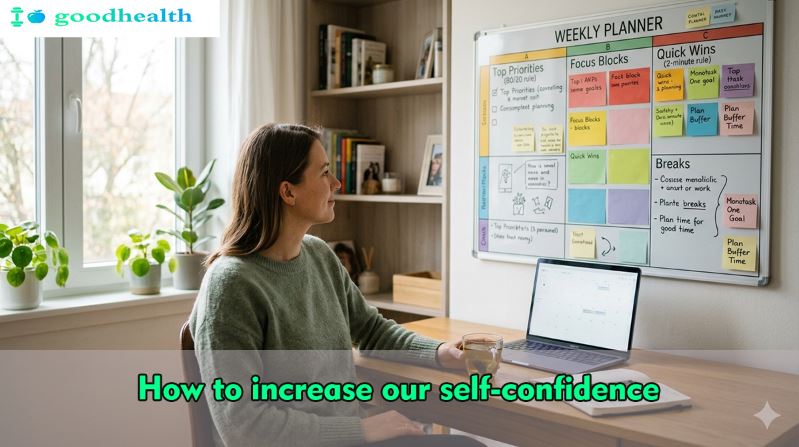
Developing a strong sense of self-assurance is rarely an overnight transformation, nor is it a trait bestowed upon a lucky few at birth. Instead, it is a cultivated skill, an ongoing practice of aligning your actions with your values and learning to trust your own capabilities. When exploring how to increase our self-confidence, we must move beyond superficial advice like simply thinking positive thoughts or mimicking extroverted behaviors. True confidence is deeply rooted in self-awareness, psychological resilience, and the willingness to face discomfort. It dictates how we navigate challenges, how we interact in our relationships, and ultimately, the trajectory of our personal and professional lives. Understanding the mechanics of self-worth allows us to dismantle the barriers of self-doubt and systematically build a more resilient, empowered mindset.
Understanding the Foundation of Genuine Self-Assurance
The journey to building lasting confidence begins with understanding the distinct difference between genuine self-assurance and mere arrogance or bravado. Genuine confidence is quiet, grounded, and intrinsically motivated. It does not require constant external validation or the diminishment of others to feel secure. Arrogance, on the other hand, is often a defense mechanism designed to mask deep-seated insecurities. When you possess true self-worth, you are comfortable with your flaws and limitations because your identity is not entirely dependent on being perfect. You can admit when you are wrong without feeling fundamentally broken.
Psychologically, our baseline level of self-belief is often shaped during our formative years through the feedback we receive from parents, teachers, and peers. If we were encouraged to take risks and praised for our effort rather than just our inherent talents, we likely developed a growth mindset. However, if our environment was highly critical or conditional, we might have internalized the message that our worth is tied strictly to our flawless performance. Recognizing these early influences is not about assigning blame, but rather about understanding the blueprints of our current mental framework.
Fortunately, the human brain is highly adaptable due to neuroplasticity. This means that regardless of your past experiences or your current level of self-doubt, you have the neurological capacity to rewire your thought patterns. By consistently choosing new, empowering behaviors and consciously challenging old, limiting beliefs, you can physically alter the neural pathways in your brain. This biological reality provides a profound sense of hope; it proves that increasing your self-confidence is a tangible, scientifically supported endeavor rather than an elusive wish.
Identifying and Challenging Your Inner Critic
One of the most significant obstacles to developing a confident mindset is the pervasive presence of the inner critic. This is the internal voice that magnifies your mistakes, dismisses your achievements, and constantly whispers that you are not quite enough. For many people, this negative self-talk operates almost entirely in the subconscious. You might not even realize how frequently you undermine your own potential until you start actively paying attention to your internal dialogue. The first step in disarming this critic is simply bringing its narratives into the light of conscious awareness.
Once you begin to notice these negative thoughts, the next crucial step is to actively challenge their validity. This technique, heavily utilized in cognitive behavioral therapy, involves examining the evidence for and against your self-critical claims. When your inner voice insists that you will completely fail at an upcoming presentation, you must pause and demand proof. Often, you will find that these fears are based on emotional reasoning rather than objective facts. You can then replace that catastrophic thought with a more balanced, realistic perspective. Instead of predicting disaster, you might reframe the thought to acknowledge that while you are nervous, you have prepared thoroughly and have successfully handled similar pressures in the past.
Overcoming Cognitive Distortions
To effectively challenge your inner critic, it is highly beneficial to familiarize yourself with common cognitive distortions. These are habitual ways of thinking that are often inaccurate and negatively biased. For example, all-or-nothing thinking convinces you that if a project is not an absolute triumph, it is a complete failure. Personalization makes you believe that another person’s bad mood is somehow a direct reaction to you. By identifying these specific distortions as they occur, you strip them of their power. You learn to view your thoughts not as absolute truths, but as mental events that you can observe, evaluate, and ultimately dismiss if they do not serve your growth.
Building Competence to Drive Lasting Confidence
There is a fundamental psychological loop that links competence and confidence. While it is important to work on your mindset, you cannot simply think your way into feeling capable; you must actively engage in behaviors that prove your capability to yourself. Confidence is the byproduct of taking action and seeing positive results, no matter how small. When you set a goal, work diligently toward it, and achieve it, you build a track record of success. This internal resume of accomplishments serves as undeniable proof that you can handle challenges, which directly increases your self-reliance and belief in your own agency.
The most effective strategy for utilizing the competence-confidence loop is to break down overwhelming ambitions into highly manageable micro-goals. If your objective is to completely change careers, looking at the entire mountain can trigger severe imposter syndrome and paralysis. However, if your goal for the week is simply to update your resume or reach out to one professional contact, the task becomes entirely achievable. Accumulating these small, consistent victories generates momentum. Your brain begins to associate your efforts with positive outcomes, gradually replacing the expectation of failure with the anticipation of success.
It is equally important to embrace the inevitable awkwardness of the learning phase. Whenever you attempt to build a new skill or enter a new environment, you will temporarily lack competence, which naturally leads to a dip in confidence. High achievers often mistake this temporary discomfort for a permanent lack of ability. By accepting that being a beginner is a necessary and temporary state, you remove the heavy burden of perfectionism. You allow yourself the freedom to make mistakes, ask questions, and learn, knowing that this early stage of incompetence is the very pathway to eventual mastery and unshakeable self-assurance.
The Role of Physical Presence and Body Language
The mind-body connection plays a heavily underestimated role in how we perceive ourselves and how we navigate the world. Our physical posture does not just reflect our internal emotional state; it actually helps create it. When you feel anxious or insecure, your natural biological response is to make yourself smaller. You might slouch, cross your arms, drop your gaze, or unconsciously restrict your breathing. While these movements are designed to protect you, they send a continuous signal to your nervous system that you are under threat, effectively reinforcing your feelings of vulnerability and self-doubt.
Conversely, adopting expansive, open body language can initiate a physiological shift that promotes feelings of power and calm. Standing tall with your shoulders back, maintaining a neutral, relaxed spine, and keeping your chest open signals to your brain that you are safe and in control. Practicing intentional eye contact and speaking with a clear, resonant tone further amplifies this effect. You do not need to adopt an aggressive or domineering posture; rather, the goal is to physically occupy the space you are rightfully entitled to. Taking slow, deep breaths from your diaphragm also lowers your heart rate and reduces cortisol levels, anchoring you in the present moment.
This physical adjustment creates a powerful positive feedback loop. When you consciously alter your body language to reflect confidence, you begin to feel more internally secure. Furthermore, the people around you will unconsciously pick up on these nonverbal cues and respond to you with greater respect and attentiveness. Experiencing this positive social feedback validates your new posture, further solidifying your internal sense of self-worth. By mastering your physical presence, you gain immediate, tangible leverage over your psychological state.
Curating a Supportive Environment and Social Circle
Human beings are profoundly social creatures, and our self-concept is continuously molded by the environments we inhabit and the people we interact with daily. It is nearly impossible to cultivate a strong sense of self-worth if you are constantly surrounded by individuals who are highly critical, cynical, or emotionally draining. Toxic relationships, whether personal or professional, slowly erode your self-belief by normalizing negativity and making you question your own value. Therefore, protecting your psychological space requires a rigorous assessment of the influences you allow into your life.
Establishing and enforcing clear personal boundaries is one of the most effective ways to curate a supportive environment and instantly boost your self-respect. A boundary is simply a limit you define regarding what you will and will not accept from others. Communicating these limits clearly—whether it involves declining an unreasonable request at work or asking a friend to stop making disparaging comments—demonstrates to yourself that your needs and feelings matter. While setting boundaries can initially feel uncomfortable, especially if you are prone to people-pleasing, the long-term payoff is a profound deepening of your internal confidence and a significant reduction in chronic anxiety.
Actively seeking out positive, growth-oriented individuals is the other half of this equation. Surrounding yourself with peers and mentors who possess the kind of healthy self-assurance you wish to emulate provides you with real-time models of success. These individuals are more likely to celebrate your victories, offer constructive rather than destructive feedback, and encourage you to take calculated risks. When you integrate yourself into a community that fundamentally believes in your potential, you begin to internalize that belief, making it significantly easier to silence your own internal critic and pursue your ambitions boldly.
Stepping Outside Your Comfort Zone Strategically
Personal growth and the expansion of self-confidence cannot occur within the confines of what is already familiar and easy. Your comfort zone is a psychological state where things feel familiar to a person and they are at ease and in control, experiencing low anxiety and stress. While resting in this zone is necessary for recovery, remaining there permanently leads to stagnation and a shrinking sense of capability. To build robust self-esteem, you must actively seek out challenges that force you to stretch beyond your current limitations. This deliberate exposure to the unknown proves to your subconscious that you are capable of surviving and thriving in unfamiliar territory.
However, the strategy behind leaving your comfort zone is vital for success. The goal is not to immediately throw yourself into a situation that induces panic or severe distress, as this can reinforce trauma and cause you to retreat further. Instead, you want to operate in the “stretch zone.” This is the space just outside your current capabilities where you feel a manageable amount of healthy stress and excitement. If you struggle with social anxiety, for instance, volunteering to give a keynote speech to a thousand people is likely a jump into the panic zone. A strategic stretch would be initiating a brief conversation with a new colleague or raising your hand to share an idea in a small team meeting.
As you consistently operate in this stretch zone, your comfort zone naturally expands to include these new experiences. What once felt intimidating gradually becomes routine. This continuous process of confronting fears, surviving the discomfort, and mastering new situations is the absolute core of building resilience. It fundamentally redefines your relationship with failure. Instead of viewing a setback as a permanent reflection of your inadequacy, you learn to see it as valuable data acquisition—a necessary step in the iterative process of becoming a highly capable, self-assured individual.
Sustaining Your Self-Belief Over the Long Term
The pursuit of increased self-confidence is not a linear destination but a lifelong practice of self-management and internal course correction. There will inevitably be days when your inner critic is particularly loud, when you face unexpected professional rejections, or when you simply feel unmoored. The objective is not to eradicate these moments of self-doubt completely, as that is an impossible standard. The true measure of a confident mindset is your ability to experience these setbacks without allowing them to dictate your ultimate sense of worth or deter you from your overarching goals.
Maintaining this personal power requires consistent maintenance of the habits that built it in the first place. By continuously challenging your negative thoughts, setting and achieving micro-goals, managing your physical presence, protecting your boundaries, and leaning into calculated discomfort, you create an unbreakable foundation of self-reliance. You transform confidence from a fleeting emotion dependent on external circumstances into a stable, deeply ingrained characteristic. Ultimately, the commitment to improving your self-worth is the most valuable investment you can make, enabling you to navigate life’s complexities with resilience, authenticity, and unwavering strength.
What are some quick daily habits to build self-confidence?
Start your day by writing down three small wins from the previous day to shift your brain’s focus toward success.
How do I act confident when I actually feel incredibly anxious?
Focus on slowing down your breathing and maintaining steady eye contact to trick both your nervous system and your audience into feeling calm.
Can you build self-esteem if you are a naturally shy introvert?
Absolutely, introverts can build deep confidence by mastering their unique skills and leaning into one-on-one connections rather than forcing extroverted behavior.
What is the difference between being confident and seeming arrogant?
Genuine confidence involves lifting others up and being completely open to learning, whereas arrogance is driven by insecurity and the need to put others down.
How long does it realistically take to improve self-confidence?
While you can boost your presence instantly with good posture, building deep-rooted confidence is an ongoing daily practice rather than an overnight fix.
Please note
The content provided in this article is for educational and informational purposes only and should not be construed as medical, nutritional, or therapeutic advice. The recommendations provided may not be appropriate for everyone. The final decision regarding your health and lifestyle is yours, and we recommend that you consult with your doctor or other health professional before making any changes or taking any action.