Benefits of olive oil

Olive oil is one of the most popular and widely used healthy oils in the world. It has been an important part of traditional Mediterranean-style eating patterns for centuries and is valued for its rich flavor, versatility, and nutritional properties. The many benefits of olive oil have made it a popular choice for people who want to improve the quality of their diet and support a healthy lifestyle.
Olive oil contains beneficial fats and naturally occurring plant compounds. When used as part of a balanced diet, it can be a nutritious alternative to some fats that are higher in saturated fat. Understanding the benefits of olive oil can help you make healthier choices when preparing everyday meals.
Olive Oil Is Rich in Healthy Monounsaturated Fats
One of the most important nutritional benefits of olive oil is its high content of monounsaturated fat, particularly oleic acid. Monounsaturated fats are considered a healthier type of dietary fat when they replace certain sources of saturated fat in a balanced diet.
Healthy fats play important roles in the body, including supporting normal cell function and helping the body absorb certain fat-soluble vitamins. Using olive oil in moderation can be an effective way to include healthy fats in meals.
Olive oil can be used in salads, vegetable dishes, soups, sauces, and many other recipes, making it easy to include in a varied and nutritious eating pattern.
Support Heart Health
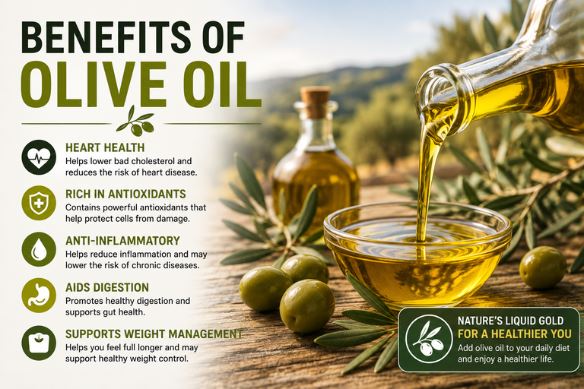
Heart health is one of the most frequently discussed areas when exploring the benefits of olive oil. Olive oil is a major component of the Mediterranean diet, an eating pattern that has been widely studied for its relationship with cardiovascular health.
Replacing some saturated fats with unsaturated fats, including those found in olive oil, may help support a healthier dietary pattern. However, olive oil is still calorie-dense, so portion size remains important.
A heart-healthy lifestyle also includes regular physical activity, adequate sleep, stress management, and a diet rich in fruits, vegetables, whole grains, legumes, nuts, and other nutritious foods.
Contains Antioxidant Compounds
Olive oil, especially extra virgin olive oil, contains naturally occurring antioxidant compounds. These include vitamin E and plant compounds known as polyphenols.
Antioxidants help protect the body’s cells from oxidative stress. Oxidative stress occurs when there is an imbalance between free radicals and the body’s natural antioxidant defenses.
Including a variety of antioxidant-rich foods in your diet is important for overall health. Olive oil can complement vegetables, fruits, nuts, seeds, and other nutrient-rich foods as part of a balanced eating pattern.
Support a Healthy Inflammatory Response
Olive oil contains plant compounds that have been studied for their potential role in supporting the body’s normal inflammatory processes. Extra virgin olive oil is particularly known for containing phenolic compounds that are being researched for their biological effects.
Inflammation is a natural process in the body, but long-term health depends on many factors, including diet, physical activity, sleep, and stress levels.
The potential benefits of olive oil are best understood as part of an overall healthy lifestyle rather than as the effect of one food alone.
Support Brain Health
Healthy dietary fats are important for normal brain function. Olive oil provides monounsaturated fats and antioxidant compounds that may contribute to a nutritious diet that supports overall brain health.
Research continues to examine the relationship between Mediterranean-style dietary patterns and healthy aging. A diet containing healthy fats, vegetables, fruits, whole grains, fish, and other nutrient-rich foods can provide a wide range of important nutrients.
The benefits of olive oil for brain health should therefore be viewed as part of a complete dietary pattern rather than a single solution for improving cognitive function.
Help Support Healthy Cholesterol Levels
Another important area of research involving olive oil relates to cholesterol. Replacing certain saturated fats in the diet with unsaturated fats may support healthier cholesterol levels.
Olive oil can be used as an alternative to some fats that are higher in saturated fat, depending on the overall diet and individual nutritional needs.
Maintaining healthy cholesterol levels also depends on other lifestyle habits, including regular exercise, consuming enough dietary fiber, maintaining a healthy body weight, and following professional medical advice when necessary.
Can Support a Healthy and Balanced Diet
One of the practical benefits of olive oil is its ability to make nutritious foods more enjoyable. Adding olive oil to vegetables, salads, beans, and other healthy foods can improve flavor and texture.
Because of its versatility, olive oil can easily become part of everyday cooking. A small amount can be used in salad dressings, marinades, sauces, roasted vegetables, and many other dishes.
Using olive oil as part of a balanced diet may encourage people to eat more vegetables and other nutrient-rich foods by making meals more flavorful and satisfying.
May Help You Feel Satisfied After Meals
Dietary fats can contribute to feelings of satisfaction and fullness after eating. Adding a moderate amount of olive oil to a balanced meal may help make food more satisfying.
However, olive oil is high in calories, and consuming excessive amounts can increase total calorie intake. Moderation is important, especially for people who are trying to manage their body weight.
Combining olive oil with fiber-rich foods, vegetables, protein sources, and whole grains can help create balanced and satisfying meals.
Olive Oil Is Versatile and Easy to Use
Olive oil can be used in many different ways, making it one of the easiest healthy oils to add to a daily diet.
Extra virgin olive oil is often used in salad dressings, dips, and dishes where its natural flavor can be appreciated. Other types of olive oil may be suitable for different cooking methods.
You can drizzle olive oil over salads and vegetables, use it in homemade dressings, add it to soups, or include it in a variety of cooked dishes.
Choosing high-quality olive oil and storing it properly can help preserve its flavor and quality.
Extra Virgin Olive Oil and Its Nutritional Value
Extra virgin olive oil is produced with minimal processing compared with more refined varieties. It generally retains more of the natural flavor and some beneficial plant compounds found in olives.
This is one reason extra virgin olive oil is often discussed when talking about the health-related benefits of olive oil.
However, all oils should be consumed in appropriate amounts. A healthy diet depends on overall eating habits rather than relying heavily on one particular food or ingredient.
Olive Oil and Healthy Aging
A nutritious diet can play an important role in supporting health as people age. Olive oil is frequently included in dietary patterns associated with healthy aging, particularly Mediterranean-style diets.
Its combination of unsaturated fats and antioxidant compounds makes it a useful ingredient in meals that emphasize vegetables, legumes, whole grains, and other whole foods.
The potential benefits of olive oil for healthy aging are most meaningful when it is part of consistent, long-term healthy lifestyle habits.
How to Include Olive Oil in Your Diet
Adding olive oil to your diet can be simple and practical. You can use it to prepare homemade salad dressings, drizzle a small amount over cooked vegetables, add it to soups, or use it as part of marinades.
Olive oil can also be combined with herbs, lemon juice, garlic, and spices to create flavorful dressings and sauces.
For a balanced approach, use olive oil in moderate amounts and combine it with a wide variety of nutrient-rich foods.
Important Considerations When Consuming Olive Oil
Although olive oil is considered a nutritious source of dietary fat, it is important to remember that it is calorie-dense. Even healthy foods can contribute to excessive calorie intake when consumed in very large amounts.
People with specific dietary needs or medical conditions should consider individual advice from a qualified healthcare professional.
Olive oil should be viewed as one component of a healthy lifestyle that includes balanced nutrition, regular physical activity, sufficient sleep, and other positive habits.
Conclusion
The benefits of olive oil make it a valuable addition to a healthy and balanced diet. Olive oil provides monounsaturated fats and naturally occurring antioxidant compounds and is an important part of Mediterranean-style eating patterns.
From supporting heart health and providing antioxidant compounds to improving the flavor of nutritious meals, olive oil offers many practical advantages. However, the greatest benefits of olive oil are likely to come from using it as part of an overall healthy lifestyle rather than relying on it as a single solution.
By using olive oil in moderation and combining it with vegetables, fruits, whole grains, lean proteins, legumes, and other nutritious foods, you can enjoy its rich flavor while supporting a healthier diet and lifestyle.
What are the main benefits of olive oil?
Olive oil provides healthy monounsaturated fats and naturally occurring antioxidant compounds. When used as part of a balanced diet, it may support heart health and contribute to an overall healthy eating pattern.
Is extra virgin olive oil healthier than regular olive oil?
Extra virgin olive oil is less refined and generally retains more of the natural flavor and plant compounds found in olives. It is commonly used in Mediterranean-style diets and is a popular choice for salads, dressings, and everyday meals.
Can olive oil help support heart health?
Olive oil contains unsaturated fats that can be part of a heart-healthy diet, especially when they replace certain sources of saturated fat. Overall diet and lifestyle habits remain important for cardiovascular health.
How much olive oil should I consume each day?
The appropriate amount depends on your overall diet and calorie needs. Olive oil is calorie-dense, so it is generally best to use moderate portions as part of balanced meals.
Can olive oil help with weight management?
Olive oil can be included in a weight-management diet because healthy fats can contribute to satisfying meals. However, because olive oil contains a significant number of calories, portion control and overall calorie balance are important.
please note
The content provided in this article is for educational and informational purposes only and should not be construed as medical, nutritional, psychological, or therapeutic advice. The advice provided may not be appropriate for everyone. The final decision regarding your health and lifestyle is yours, and we recommend that you consult with your doctor, counselor, or other health professional before making any changes or taking any action.