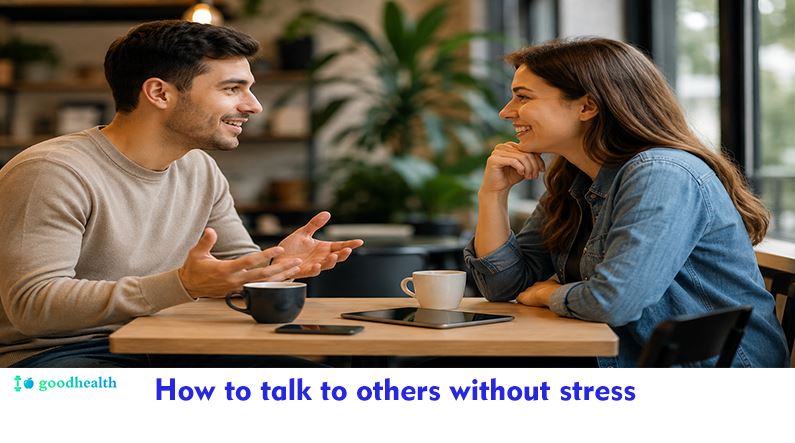
How to talk to others without stress

Feeling an overwhelming surge of anxiety during everyday interactions is far more common than most people admit. Whether standing near the office coffee machine, attending a formal networking event, or catching up with acquaintances, the simple act of starting and maintaining a conversation can trigger physical tension and mental fatigue. For millions of individuals, social interactions carry an invisible weight fueled by the fear of saying the wrong thing, being judged, or facing awkward silences. Learning how to talk to others without stress is not about transforming into an over-the-top extrovert overnight; it is about developing psychological comfort, mastering practical communication tools, and dismantling the internal pressure that turns basic dialogue into a high-stakes performance.
When conversational anxiety takes hold, it distorts the reality of human connection. People often view communication as an exam where every word is graded, rather than a shared, collaborative exchange. This performance mindset shifts attention inward, causing individuals to monitor their own words, body language, and tone in real time. By understanding the underlying psychological mechanisms of social stress and adopting practical, actionable techniques, anyone can transform chaotic mental tension into calm, genuine conversational ease.
Understanding the Root Causes of Conversational Stress
Conversational stress rarely stems from a lack of vocabulary or intelligence. Instead, it is usually driven by deep-seated psychological triggers and physiological responses. When faced with social situations, the human brain can misinterpret potential social evaluation as a direct threat to safety. This triggers a mild fight-or-flight response, releasing cortisol and adrenaline that elevate heart rate, cause shallow breathing, and cloud clear thinking. When your nervous system treats a casual chat like a dangerous encounter, staying composed becomes a steep uphill battle.
Another primary driver of dialogue-related anxiety is perfectionism. Many individuals operate under the unwritten rule that every contribution to a conversation must be witty, insightful, or thoroughly entertaining. This self-imposed standard creates enormous cognitive load. Instead of simply engaging with the person in front of them, the speaker is constantly drafting, editing, and vetting thoughts before allowing them to be spoken. This hyper-vigilance depletes mental bandwidth rapidly, leading to brain fog and heightened nervousness.
Furthermore, past negative experiences can leave lasting residue on future interactions. A single memorable instance of public embarrassment, rejection, or awkwardness can train the mind to expect similar outcomes in subsequent social settings. The brain relies on these past memories to predict future danger, prompting hyper-awareness during even the most low-risk interactions. Recognizing that these physiological and psychological reactions are automatic defense mechanisms—rather than personal failings—is the first step toward reducing their intensity.
How the Spotlight Effect Amplifies Social Pressure
A major psychological cognitive bias contributing to social tension is known as the spotlight effect. This phenomenon causes individuals to systematically overestimate how much others notice and evaluate their appearance, words, and mistakes. People suffering from conversational stress often believe that every stumble, hesitation, or momentary lapse in thought is being scrutinized under a magnifying glass by their speaking partner.
In reality, most people are far too consumed by their own internal thoughts, self-perceptions, and daily worries to pay meticulous attention to someone else’s minor conversational missteps. When a person stumbles over a word or pauses to collect a thought, the listener rarely registers it as a flaw. Realizing that listeners are generally lenient and focused primarily on their own experience helps shrink the imagined spotlight down to size, instantly relieving pressure.
Mental Frameworks to Lower Pressure Before You Speak
To communicate comfortably, one must reframe the fundamental purpose of dialogue. Shift your perspective away from performance and toward curiosity. When a conversation is viewed as a performance, the focus remains squarely on the self: How do I sound? Do I look confident? What should I say next? Conversely, when communication is approached with genuine curiosity, the focus shifts entirely to the other person: What is their perspective? What experiences shape their view? This subtle shift releases the burden of having to be impressive and allows you to simply be present.
Lowering personal standards for casual dialogue is another powerful mental adjustment. Not every conversation needs to yield a profound revelation or result in a lifelong friendship. The vast majority of daily interactions are functional, casual, or lighthearted exchanges designed merely to acknowledge human presence. Accepting that mundane, ordinary topics like the weather, busy schedules, or weekend plans are perfectly acceptable conversational bridges removes the demand for constant brilliance.
It is equally important to grant yourself permission to pause. Fast, immediate responses are not the hallmark of effective communication; thoughtful engagement is. When an individual feels stressed, they often speed up their speech pattern out of an urgent desire to fill space and end the perceived discomfort. Remind yourself before entering any conversation that taking a deliberate breath or pausing for two seconds before responding signals confidence, composure, and clarity.
Finally, decouple your self-worth from the outcome of an interaction. Sometimes a conversation feels stiff or cold simply because the other person is tired, preoccupied, stressed, or naturally reserved. Assuming full responsibility for the energy or success of a conversation is a burden no single person should carry. Recognizing that a flat interaction is often a reflection of external circumstances rather than personal inadequacy shields your confidence from unnecessary hits.
In-the-Moment Grounding Techniques for Calm Dialogues
When physical symptoms of anxiety arise mid-conversation, immediate physiological regulation is necessary. The most accessible tool for regaining control is tactical breathing. Taking a slow, deep breath into the abdomen with a extended exhale activates the parasympathetic nervous system, sending a direct physical signal to the brain that there is no real danger. You can easily take a quiet, measured breath while the other person is speaking without breaking the flow of the interaction.
Physical grounding techniques can also anchor a racing mind during stressful moments. Focus on feeling the physical connection between your feet and the floor, or gently rest your hands against a table or in your lap. By directing sensory attention toward physical contact points, you pull your mind out of catastrophic internal monologues and anchor it back in the physical room. This simple somatic exercise disrupts the feedback loop of rising panic.
Mindset Shift:
From: "I need to impress them and say the right thing."
To:   "I am here to listen, learn, and share comfortably."
Monitoring and adjusting body language helps trick the nervous system into a state of ease. Anxiety naturally causes people to cross their arms, hunch their shoulders, and minimize their physical presence as a protective posture. Intentionally dropping your shoulders away from your ears, unclenching your jaw, and opening your posture signals safety to your own mind. Adopting an open, relaxed posture lowers stress hormones and projects an approachable, calm demeanor to others.
Slowing down the tempo of your voice works wonders for both internal calm and external perception. Speaking at a slightly measured pace prevents hyperventilation and gives your brain the necessary time to construct coherent sentences. When you speak slowly, you implicitly signal to your own brain and your conversational partner that you have the right to occupy time and space, instantly de-escalating internal urgency.
Conversational Tactics That Take the Spotlight Off You
One of the most effective strategies for reducing conversation-related stress is becoming a skilled, active listener. When you prioritize listening over talking, you naturally transfer the primary speaking responsibility to your companion. Most people appreciate the opportunity to express their opinions, share stories, and talk about their lives. By becoming a attentive audience, you deliver immense social value while drastically reducing your own speaking burden.
Active listening requires full engagement rather than merely waiting for your turn to speak. Maintain soft eye contact, nod periodically, and offer brief verbal affirmations that signal comprehension. When you are truly absorbed in absorbing what someone else is saying, your internal critic quietens because mental resources are directed outward rather than inward.
Another valuable tool is sharing micro-vulnerabilities when appropriate. Attempting to maintain a polished, flawless exterior creates immense internal strain and often keeps conversations superficial. Admitting small, relatable truths—such as mentioning that you are somewhat tired today or that you find large group settings a bit overwhelming—breaks the ice and lowers social barriers. Authenticity invites empathy, encouraging the other person to drop their guard as well.
It is also helpful to master the art of smooth transitions. If a topic reaches a natural conclusion, you do not need to invent an entirely new subject out of thin air. Instead, use bridging phrases to pivot to related ideas based on something previously mentioned. Referencing an earlier detail demonstrates attentiveness and keeps the conversation flowing along logical paths without forcing you to scramble for new topics.
How to talk to others without stress
Using Open-Ended Questions and Reflective Responses
To keep a conversation flowing smoothly without feeling like an interrogation, master the strategic combination of open-ended questions and reflective statements. Open-ended questions are those that cannot be answered with a simple “yes” or “no.” They typically begin with words like how, what, or tell me about. Asking someone how they got into their line of work invites a rich narrative, whereas asking if they like their job yields a one-word answer that stalls momentum.
Reflective responses build directly on open-ended questions by mirroring the emotional core or key details of what the speaker just shared. For instance, if a colleague describes a chaotic project, responding with a statement like “It sounds like that required a tremendous amount of troubleshooting” validates their experience. This technique shows deep comprehension, encourages the speaker to elaborate, and keeps the conversation moving effortlessly without requiring you to manufacture fresh topics.
Managing Awkward Pauses and Unexpected Tension
Silence is one of the most feared elements of social interaction, yet it is a natural, healthy component of human communication. The perception that every pause in dialogue is “awkward” is a mental construct fueled by social anxiety. In reality, comfortable communicators view silences as brief rests—moments to digest information, take a breath, or consider a thought before continuing. Reframing silence as neutral rather than negative instantly eliminates the panic to fill every second with noise.
When an unexpected lull occurs, resist the urge to blurt out random filler phrases. Instead, lean into the pause with a relaxed posture and a soft smile, or use the moment to take a drink of water. If the silence persists and you wish to restart the conversation, simply reference your immediate environment or bring up a lighter subject. Acknowledging the environment—such as commenting on the venue, the food, or a shared circumstance—is a seamless way to re-engage without pressure.
Navigating Awkward Moments:
- Reframe silence as a natural pause for thought, not a failure.
- Use your surroundings as a quick source of easy conversation topics.
- Acknowledge mistakes lightly and move on without dwelling on them.
Handling unexpected disagreement or conversational tension requires a calm, non-defensive posture. If a topic becomes unexpectedly contentious or uncomfortable, remember that you are never obligated to debate or defend your positions in casual settings. Using diplomatic, de-escalating phrases such as “That is an interesting perspective” or “I can see why you would view it that way” acknowledges the other person’s input without requiring you to agree or escalate the friction.
If you make a genuine social misstep or stumble over your words, the best course of action is to acknowledge it briefly, laugh it off, and move forward. Over-apologizing or dwelling on a minor mistake draws unnecessary attention to it and prolongs the awkwardness. A lighthearted, brief self-correction demonstrates high emotional intelligence and self-assurance, signaling to everyone involved that the moment is insignificant.
Building Lasting Conversational Confidence Through Small Actions
Developing long-term confidence in social settings requires consistent, low-stakes exposure. Attempting to overcome communication anxiety by attending a massive networking event without preparation can lead to overwhelm. Instead, practice your communication skills in low-friction, everyday environments where the consequences of a poor interaction are virtually zero.
Great opportunities for low-stakes practice include making brief, friendly eye contact and saying hello to a neighbor, asking a barista how their day is going, or making a quick, genuine compliment to a colleague about a project. These short, focused exchanges serve as micro-training sessions. Over time, successfully navigating these brief interactions rewires your neural pathways, proving to your brain that social exchanges are fundamentally safe and manageable.
Keeping a record of positive social outcomes is another effective way to counteract the brain’s natural negativity bias. Anxiety often compels individuals to obsess over what went wrong during an interaction while completely ignoring what went well. Spend a few minutes at the end of the day noting brief moments where a conversation went smoothly, a joke landed, or a pleasant connection was made. Documenting these small victories gradually rebuilds your internal narrative regarding your social abilities.
Finally, cultivate patience and self-compassion throughout the process. Social ease is a skill developed over time, not an innate trait that people either possess or lack. There will inevitably be days when you feel more tired, reserved, or anxious than usual, and that is entirely acceptable. Treating yourself with kindness during off days prevents temporary setbacks from undermining your long-term progress.
Mastering Stress-Free Everyday Communication
Learning to talk to others without stress is a transformative journey that unlocks richer personal relationships, improved professional opportunities, and a profound sense of personal freedom. By dismantling perfectionism, shifting focus away from internal performance toward external curiosity, and utilizing practical grounding techniques, you strip away the unnecessary pressure that makes social interactions feel daunting. Communication is fundamentally about human connection, and connection thrives not on flawless eloquence, but on presence, authenticity, and attentive listening. As you integrate these mental frameworks and behavioral tools into your daily routine, social settings gradually transition from sources of apprehension into opportunities for meaningful, comfortable engagement.
Why do I get so anxious when talking to people?
Conversational anxiety usually stems from a fear of judgment, which triggers your body’s natural fight-or-flight stress response.
How can I calm my nerves right before a conversation?
Take a few deep belly breaths and shift your focus onto listening to the other person rather than monitoring your own performance.
What should I do if my mind goes blank while talking?
Ask a simple open-ended question about something they just mentioned to buy yourself time while keeping the conversation flowing naturally.
How do I start talking to someone new without feeling awkward?
Start with a brief, low-pressure observation about your current shared setting or ask a simple, context-relevant question.
Can social stress when speaking to others fade over time?
It rarely vanishes entirely on its own, but you can significantly reduce conversational stress through gradual, low-stakes exposure and self-compassion.
Please note
The content provided in this article is for educational and informational purposes only and should not be construed as medical, nutritional, or therapeutic advice. The recommendations provided may not be appropriate for everyone. The final decision regarding your health and lifestyle is yours, and we recommend that you consult with your doctor or other health professional before making any changes or taking any action.