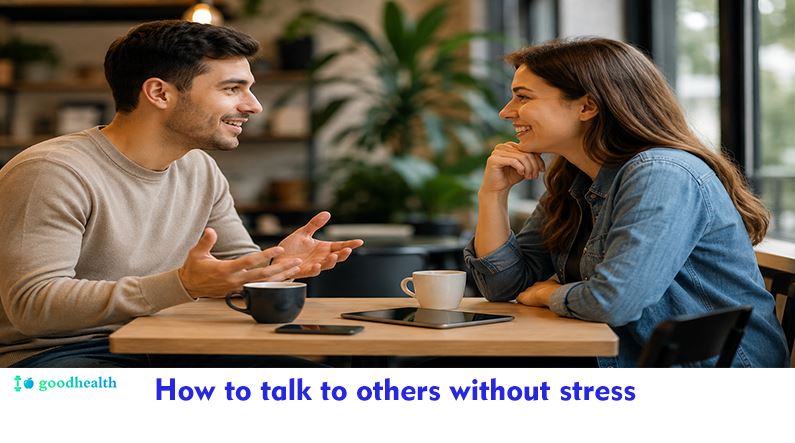
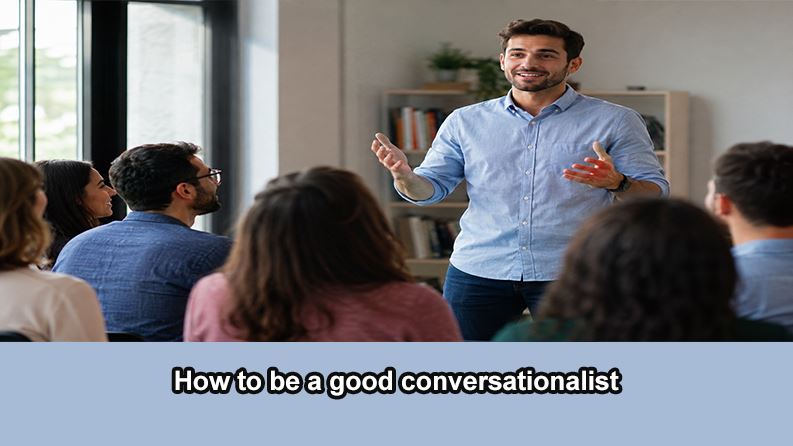
How to be a good conversationalist

Many people believe that the ability to charm a room or keep a conversation flowing effortlessly is a genetic gift, possessed only by natural-born extroverts. In reality, the art of communication is a learned skill, much like playing an instrument or mastering a new language. Whether you find yourself freezing up during networking events, struggling to move past dry small talk, or feeling like your daily interactions lack depth, these challenges can be overcome with deliberate practice. Learning how to be a good conversationalist is not about memorizing witty scripts or performing for an audience; it is about cultivating curiosity, sharpening your observational skills, and creating a space where other people feel heard and valued. By shifting your focus from “What should I say next?” to “How can I connect with this person?”, you unlock a more authentic, rewarding way of interacting with the world.
The Core Foundation of Active Listening
Active listening is the absolute bedrock of any meaningful dialogue. Most people listen with the intent to reply, not to understand. They spend their conversational partner’s turn formulating their own next point, treating the other person’s speech as a mere intermission. True active listening requires a conscious shift in cognitive energy. It demands that you quiet your inner monologue, focus entirely on the speaker’s words, tone, and pacing, and absorb the full weight of what they are communicating. When you listen this deeply, you pick up on subtle emotional undercurrents and conversational breadcrumbs that would otherwise go completely unnoticed.
Beyond the internal cognitive effort, active listening relies heavily on physical and non-verbal reinforcement. Human beings are incredibly perceptive when it comes to body language; we can instantly sense when someone’s eyes glaze over or when their posture shifts away from us. To demonstrate that you are fully engaged, maintain natural eye contact, lean slightly inward, and use micro-validations like nodding or brief verbal acknowledgments. These non-verbal cues create a psychological safety net, signaling to the speaker that their thoughts are valuable and that they have your undivided attention.
To elevate your active listening from passive absorption to active engagement, you must learn to practice reflective listening. This technique involves periodically paraphrasing or summarizing what you have heard to ensure mutual understanding. For instance, responding with phrases like “It sounds like you felt really overwhelmed by that sudden shift” or “So, if I understand correctly, your main priority is…” does two things simultaneously. First, it prevents miscommunication by correcting any false assumptions in real-time. Second, and perhaps more importantly, it makes the other person feel profoundly seen and validated, which is one of the quickest ways to build deep, lasting rapport.
Mastering the Art of Open-Ended Questions
If active listening is the engine of a conversation, then open-ended questions are the fuel that keeps it running. A common conversational pitfall is relying on closed-ended questions, which can be answered with a simple “yes,” “no,” or a one-word factual response. Questions like “Did you have a good weekend?” or “Do you like your job?” often lead to dead ends because they do not require the other person to elaborate. By contrast, open-ended questions invite narrative, self-reflection, and emotional depth. They shift the dynamic from a rigid question-and-answer session to a collaborative storytelling experience.
To formulate highly effective open-ended questions, shift your inquiry style to focus on the “how” and “why” behind an experience, rather than just the “what.” Instead of asking a colleague what project they are working on, you might ask, “How have you been navigating the challenges of your latest project?” or “What drew you to this specific line of work in the first place?” These prompts allow the speaker to choose their own entry point into the topic, giving them the freedom to share what they find most exciting or meaningful. It turns a mundane exchange of facts into a deeper exploration of motivation, perspective, and personal philosophy.
However, there is a delicate balance to strike when asking questions. If you ask one probing question after another without offering any of your own thoughts, the interaction can quickly begin to feel like an interrogation. The secret to maintaining a natural conversational flow is to weave your questions into the context of what has already been said. Use the speaker’s previous statements as a launching pad. When they mention a detail, use that specific detail to anchor your next open-ended question. This shows that you are not just running through a mental checklist of polite conversation starters, but are actively co-constructing the dialogue in real-time.
The Dynamics of Conversational Reciprocity
A successful conversation is never a solo performance; it is a collaborative dance that relies on conversational reciprocity. This concept represents the natural give-and-take between two people, where speaking time, vulnerability, and engagement are balanced. When this balance is disrupted, the interaction suffers. On one hand, you have the chronic monologue—someone who dominates the airtime, turning the interaction into a platform for self-promotion. On the other hand, you have the passive observer—someone who answers only when prompted and offers nothing of their own volition. Both extremes stall connection and leave the other party feeling drained or unappreciated.
To achieve perfect reciprocity, you can utilize a practical communication strategy known as the “hook and loop” method. The “hook” is a brief, engaging, and relatable piece of information about yourself—a personal anecdote, an opinion, or a current feeling. The “loop” is the transition where you throw the conversational ball back to the other person, inviting them to share their own perspective. For example, if someone asks how your week is going, you might say, “It’s been incredibly busy because I’m preparing for a big presentation, but I managed to find a fantastic new coffee shop down the street. Have you discovered any hidden gems in the neighborhood lately?” This approach keeps the momentum alive while ensuring both voices are heard.
Cultivating conversational reciprocity also requires a willingness to step into vulnerability. If you keep your responses strictly surface-level and superficial, you create an invisible barrier that prevents genuine connection. Sharing small, relatable struggles, passions, or quirky personal preferences humanizes you and invites the other person to let their guard down as well. It is important to remember that people do not connect over flawless facades; they connect over shared humanity, imperfections, and mutual experiences. Revealing your true thoughts, even in small doses, is the catalyst that transforms a polite exchange into a memorable, meaningful conversation.
Reading the Room and Navigating Social Cues
A significant portion of human communication is entirely non-verbal, meaning that being a good conversationalist requires you to be an excellent observer of social cues. Reading the room involves paying close attention to the physiological signals that people unconsciously project. For instance, notice the direction of a person’s feet and torso; if their body is angled away from you or if they are frequently glancing at the exit, it is a clear indication that they are disengaged or need to leave. Similarly, micro-expressions—such as a brief furrow of the brow, a tight smile, or a sudden change in vocal pitch—can give you instant feedback on how your words are being received.
Being attuned to these cues allows you to navigate transitions and change subjects gracefully before a topic becomes completely exhausted. Conversations naturally expand and contract, and knowing when to let a topic die is just as important as knowing how to start one. If you notice the energy levels dropping, or if the responses you receive are becoming increasingly brief, do not try to force the topic. Instead, gently pivot by referencing a physical detail in your current environment or by bridging to a related concept. A smooth transition might sound like, “Speaking of travel, that actually reminds me of a trip I took last summer…” which keeps the momentum flowing without a jarring break.
Furthermore, mastering social cues means learning how to sit comfortably with silence. In our fast-paced society, we often view a brief pause in conversation as a failure—an “awkward silence” that must be instantly filled with meaningless chatter. However, skilled communicators recognize that pauses are a natural, healthy part of human interaction. A moment of silence can indicate that the other person is deeply reflecting on what you said, or it can simply provide a necessary breathing room for both parties to gather their thoughts. Embracing these pauses with calm confidence, rather than anxiety, projects a sense of security and groundedness that makes others feel incredibly comfortable in your presence.
Moving Beyond Small Talk to Deep Connections
While small talk is often dismissed as shallow or tedious, it serves an essential social purpose: it is the safe runway that allows a conversation to take off. You cannot jump directly into deeply personal or philosophical topics without first establishing a baseline of comfort and trust. The goal of a skilled conversationalist is not to eliminate small talk entirely, but to navigate it efficiently so you can pivot toward more substantial territory. Think of small talk as a diagnostic phase where you are searching for clues, mutual interests, and shared values that can serve as a bridge to deeper dialogue.
To transition away from superficial topics, look for opportunities to ask about the “why” behind the mundane facts. For example, if someone mentions they work in finance, instead of asking about their daily tasks, ask what originally inspired them to choose that career path, or what the most surprising aspect of their industry is. This shifts the focus from dry logistics to personal motivations, passions, and beliefs. By shifting the conversation to focus on emotional drivers and experiences, you rapidly bypass the standard script and enter a space where both of you can speak with genuine enthusiasm.
Another highly effective strategy for fostering deep connection is to focus the conversation around ideas and concepts rather than people and events. While discussing current events or mutual acquaintances has its place, discussing books, philosophies, future goals, or creative projects invites a much richer intellectual exchange. When you share ideas, you are sharing a piece of how you view the world, which naturally invites the other person to do the same. This level of communication builds a profound sense of mutual understanding, transforming a casual acquaintance into a meaningful relationship.
Overcoming Social Anxiety and Conversational Roadblocks
For many, the biggest obstacle to becoming a highly effective communicator is not a lack of technique, but the paralyzing presence of social anxiety. This anxiety often stems from the “egocentric bias”—the cognitive illusion that everyone around us is hyper-focused on our performance, waiting for us to make a mistake. In reality, other people are almost always preoccupied with their own thoughts, insecurities, and how they are being perceived. Recognizing that the pressure is largely self-imposed can help you step out of your head and into the present moment, allowing you to focus on the person in front of you rather than your own internal anxiety.
Even the most seasoned communicators experience conversational roadblocks, awkward silences, or moments where a joke falls completely flat. The key to maintaining your conversational flow is not to avoid these moments, but to handle them with grace and humor. If you make a social gaffe or say something clunky, the worst thing you can do is over-apologize or let it derail the entire interaction. Instead, acknowledge it lightly, laugh it off, and move on. A simple, “Well, that didn’t come out right at all! Let me try that again,” instantly diffuses the tension and shows a level of self-awareness and confidence that people find highly appealing.
Like any other skill, building social fluency requires consistent practice in low-stakes environments before you can perform comfortably in high-pressure situations. You do not need to wait for a major networking event or a formal social gathering to practice your skills. Start small by engaging in brief, friendly interactions with the people you encounter in your daily life—such as the barista at your local coffee shop, a cashier, or a coworker in the elevator. These micro-interactions are excellent, low-risk opportunities to practice eye contact, ask quick open-ended questions, and hone your ability to project warmth and presence.
Cultivating Emotional Intelligence in Daily Interactions
At its core, conversational mastery is not just a collection of verbal techniques; it is a direct reflection of your emotional intelligence. Emotional intelligence, or EQ, is the ability to recognize, understand, and manage both your own emotions and the emotions of those around you. When you approach social interactions with a high level of EQ, you are able to look past the literal words being spoken and connect with the underlying human experience. This emotional awareness allows you to navigate sensitive topics with sensitivity, read subtle shifts in energy, and respond in a way that fosters trust, mutual respect, and genuine alignment.
It is important to recognize that high emotional intelligence separates genuine conversationalists from those who merely use social hacks. Mechanical social skills can sometimes feel manipulative or superficial, as if the person is simply running an algorithm to win your favor. When you cultivate real EQ, your motivation shifts from self-interest to mutual benefit. You begin to care less about performing perfectly and more about whether the other person leaves the conversation feeling uplifted, understood, or intellectually stimulated.
Empathy as a Conversational Catalyst
Empathy is the willingness to step outside your own perspective and view the world through someone else’s eyes. In a conversation, practicing empathy means suspending judgment and striving to understand the emotional state of the speaker. When someone is sharing a difficult experience, they are rarely looking for a quick fix or unsolicited advice; more often, they are simply looking for a witness to their experience. By offering empathetic validation—such as “That sounds incredibly stressful, I can see why that would be difficult”—you provide a comforting, non-judgmental space that allows the other person to feel deeply supported and understood.
Furthermore, empathy allows you to tailor your communication style to match the emotional needs of the moment. If your conversational partner is feeling low, an overly energetic or boisterous tone can feel jarring and disconnected. Conversely, if they are excited about an achievement, matching their enthusiasm validates their joy. This emotional mirror-imaging does not mean losing your own identity; rather, it is an act of social generosity that aligns your frequency with theirs, creating a harmonious shared experience.
How to be a good conversationalist
Managing Emotional Reactivity
Another critical component of emotional intelligence is the ability to manage your own emotional reactions during tense or sensitive discussions. It is natural to feel defensive or reactive when someone expresses an opinion that contradicts your core values or beliefs. However, a good conversationalist does not let their immediate emotional reactions hijack the dialogue. Instead of reacting impulsively, take a deep breath, pause, and approach the disagreement with curiosity rather than combativeness.
Asking clarifying questions like “That’s an interesting perspective, what led you to that conclusion?” allows you to explore differences constructively, preserving the relationship while fostering a mature, intellectually stimulating exchange. This level of self-regulation prevents debates from devolving into arguments, turning potential friction points into opportunities for profound mutual learning. When you demonstrate that you can handle opposing viewpoints without losing your temper, you earn a reputation as a trustworthy, highly sophisticated communicator.
A Practical Roadmap to Conversational Mastery
Becoming a truly exceptional conversationalist is a continuous journey of self-discovery, observational refinement, and emotional development. It is an investment that yields immense personal and professional dividends over time. By mastering the fundamental pillars of active listening, asking powerful open-ended questions, maintaining conversational reciprocity, and developing your emotional intelligence, you transition from a passive participant in social spaces to an active creator of meaningful human connection. The skills required to build this level of social fluency are entirely within your reach, requiring only a willingness to step outside your comfort zone and engage with others with genuine curiosity.
As you apply these strategies in your daily life, remember that the goal is not to achieve social perfection or to execute a flawless performance. The most memorable conversations are often those that are beautifully imperfect, marked by raw authenticity, shared laughter, and mutual vulnerability. Every interaction you have—whether it is a brief exchange with a stranger or a deep, late-night discussion with a close friend—is an opportunity to practice, experiment, and refine your approach. Over time, these practices will integrate into your natural communication style, allowing you to navigate any social environment with quiet confidence and ease.
Ultimately, refining your ability to communicate effectively is one of the most powerful ways to enrich your life and the lives of those around you. Human beings are hardwired for connection, and the quality of our relationships directly dictates the quality of our lives. By elevating your communication skills, you open doors to new professional opportunities, deepen your personal bonds, and cultivate a richer, more empathetic understanding of the diverse perspectives that shape our world. Social fluency is a lifelong asset, and with consistent, deliberate practice, you can unlock a level of connection that transforms both your personal and professional reality.
How do you start a conversation with someone you don’t know without being awkward?
The easiest way is to make a positive observation about your shared environment and follow it up with a simple, open-ended question.
What is the best way to keep a conversation going when it starts to fade?
Use the “thread-pulling” technique by asking a follow-up question about a specific detail the other person just mentioned rather than changing the subject.
How can an introvert become a naturally good conversationalist?
Introverts actually have a major advantage because their natural inclination to listen deeply allows them to ask highly engaging, thoughtful questions.
How do I stop talking too much about myself during a conversation?
Try using the “conversational rule of thirds” where you spend one-third of the time listening, one-third asking questions, and only one-third sharing your own stories.
How do you politely end a conversation when you want to leave?
Simply use a warm “exit line” that references a positive part of the chat, like “I’ve loved hearing about your trip, but I need to go grab a refill—hope to catch up more later!”
Please note
The content provided in this article is for educational and informational purposes only and should not be construed as medical, nutritional, or therapeutic advice. The recommendations provided may not be appropriate for everyone. The final decision regarding your health and lifestyle is yours, and we recommend that you consult with your doctor or other health professional before making any changes or taking any action.
Shop new arrivals
-
Emotional Advantage
Original price was: €12.90.€8.90Current price is: €8.90. -
Healthy Life Blueprint
Original price was: €24.90.€15.90Current price is: €15.90. -
How to break negative habits
Original price was: €12.90.€6.90Current price is: €6.90. -
How to have continuity
Original price was: €15.90.€8.90Current price is: €8.90. -
Living with Purpose
Original price was: €14.90.€9.90Current price is: €9.90.