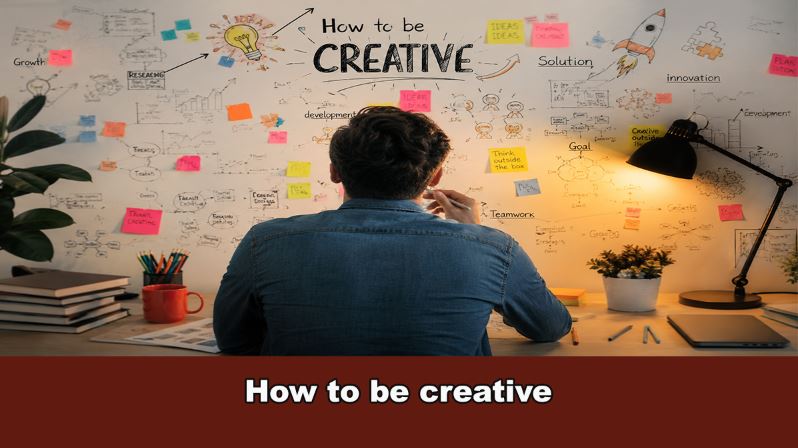
How to be creative in business


In today’s rapidly evolving commercial landscape, knowing how to be creative in business is no longer a soft skill reserved exclusively for marketing departments or graphic design teams. It has become a fundamental requirement for long-term survival, operational efficiency, and sustainable competitive advantage. Companies that fail to innovate often find themselves outpaced by agile competitors who leverage fresh perspectives to solve complex problems, optimize internal processes, and capture new market share. The modern definition of corporate creativity extends far beyond aesthetic expression; it encompasses the strategic ability to connect seemingly unrelated concepts, challenge established industry norms, and develop solutions that resonate deeply with shifting consumer demands.
Cultivating this level of innovative thinking requires a deliberate shift in both individual mindset and organizational culture. Many professionals mistakenly believe that creativity is an innate talent, a mysterious spark of genius bestowed upon a lucky few. In reality, business creativity is a highly trainable muscle that strengthens with consistent practice, psychological safety, and the right strategic frameworks. When leaders and employees actively commit to nurturing this capability, they unlock a formidable engine for growth that can transform stagnant operations into dynamic, industry-leading enterprises.
Understanding the True Role of Creativity in the Corporate World
To effectively harness creative power within a professional environment, it is crucial to redefine what the term actually means in a commercial context. Business creativity is essentially applied imagination. It is the rigorous process of generating novel, useful ideas and translating them into tangible value, whether that takes the form of a groundbreaking new product, a highly efficient supply chain optimization, or an entirely unprecedented customer service model. When organizations view innovation through this pragmatic lens, it demystifies the concept and makes it accessible to every employee, from front-line customer support representatives to C-suite executives.
The link between creative thinking and sustained competitive advantage is undeniable. In saturated markets where traditional optimization strategies yield diminishing returns, incremental improvements are rarely enough to secure market leadership. Organizations must instead rely on lateral thinking to uncover unarticulated customer needs and pioneer blue-ocean strategies. This proactive approach allows companies to dictate market trends rather than constantly reacting to them. By fostering an environment where conventional wisdom is routinely questioned, businesses position themselves to pivot swiftly when economic conditions fluctuate or disruptive technologies emerge.
Furthermore, integrating creativity into daily operations fundamentally alters the way a company approaches risk and resilience. Traditional corporate structures often penalize deviation from the norm, inadvertently breeding a culture of fear and complacency. Conversely, environments that champion business creativity reframe calculated risk-taking as an essential component of research and development. This paradigm shift encourages employees to view setbacks not as definitive failures, but as valuable data points that inform the next iteration of a project. Ultimately, this resilient mindset is what separates organizations that merely weather industry storms from those that actively thrive within them.
Building a Foundation for Innovative Thinking
Before specific brainstorming techniques can be successfully implemented, a company must establish a psychological foundation that genuinely supports unconventional thinking. The absolute prerequisite for business creativity is psychological safety, a climate in which team members feel comfortable expressing half-formed ideas, asking naive questions, and challenging the status quo without fear of embarrassment or professional reprisal. When leadership explicitly rewards curiosity and demonstrates vulnerability by admitting they do not have all the answers, it sets a powerful precedent. This openness signals to the rest of the organization that the pursuit of innovation is a collective, iterative journey rather than a demand for instant perfection.
In addition to psychological safety, organizations must intentionally design structures that protect time for deep, uninterrupted thought. The modern workplace is frequently characterized by a relentless barrage of emails, instant messages, and back-to-back meetings, all of which prioritize urgent, reactive tasks over vital, proactive strategy. True creative problem solving requires mental space. Forward-thinking companies address this by implementing policies such as “no-meeting days” or establishing dedicated quiet zones where employees can engage in the deep work necessary to synthesize complex information and generate original insights.
Equally important is the deliberate exposure to diverse stimuli outside of one’s immediate industry or job function. When professionals operate exclusively within their own silos, their cognitive frameworks become rigid, resulting in predictable, uninspired solutions. Encouraging employees to attend cross-disciplinary conferences, engage in continuous learning, or simply explore hobbies unrelated to their core competencies introduces fresh mental models. These external inputs serve as the raw material for innovation, allowing individuals to draw unexpected parallels and apply successful paradigms from disparate fields to their own specific business challenges.
Practical Strategies to Stimulate Business Creativity
Once the cultural groundwork is laid, organizations can deploy specific methodologies to actively stimulate innovative thinking among their ranks. One of the most effective strategies is the intentional cross-pollination of ideas across different departments. Siloed organizations stifle creativity because they limit the flow of information and diverse perspectives. By assembling cross-functional teams comprising individuals from engineering, sales, customer service, and finance, a business creates a rich intellectual ecosystem. A problem that appears insurmountable to a software developer might be easily reframed and solved by a sales director who understands the underlying human psychology of the end-user.
Another vital approach is the practice of redefining the core problem before attempting to brainstorm solutions. Often, teams rush to fix the most obvious symptom without investigating the underlying systemic issue. By spending a disproportionate amount of time asking probing, fundamental questions about the nature of the challenge, professionals can uncover entirely new avenues for innovation. This technique forces the mind away from default assumptions and ensures that the creative energy is directed toward solving the right puzzle, rather than building an incredibly clever solution for an irrelevant issue.
Implementing Structured Brainstorming Techniques
While the concept of brainstorming is ubiquitous in the corporate world, it is frequently executed poorly, resulting in dominant personalities monopolizing the conversation while introverted thinkers remain silent. Structured techniques, such as the SCAMPER method or negative brainstorming, provide a necessary framework that democratizes the idea generation process. The SCAMPER technique, for instance, prompts teams to Substitute, Combine, Adapt, Modify, Put to another use, Eliminate, or Reverse existing processes or products. This systematic provocation forces the brain to examine familiar assets from highly unfamiliar angles, reliably producing innovative concepts that unstructured sessions rarely uncover.
Similarly, negative brainstorming, also known as reverse engineering a problem, asks teams to figure out how to guarantee the absolute worst possible outcome. If a company wants to improve customer retention, the team brainstorms every conceivable way to drive customers away. This counterintuitive exercise is remarkably effective because it temporarily removes the pressure to be “brilliant,” freeing up cognitive resources. Once the team has compiled a comprehensive list of disastrous actions, they simply flip those concepts to reveal robust, highly creative strategies for achieving their actual objective.
Leveraging Constraints to Drive Innovation
A common misconception is that creativity requires absolute freedom, unlimited budgets, and endless timelines. In reality, complete freedom often leads to analysis paralysis, while strict constraints act as a powerful catalyst for ingenuity. When resources are abundant, the default corporate response is to throw money or manpower at a problem. However, when time, capital, or technological capabilities are artificially or naturally restricted, teams are forced to abandon conventional approaches and invent highly efficient, unorthodox solutions.
Embracing constraints forces a shift from resource accumulation to resourcefulness. For example, imposing a strict constraint on the physical size of a product or the duration of a client presentation demands ruthless prioritization and elegant simplification. Leaders can actively harness this psychological quirk by introducing artificial limitations during the ideation phase, compelling their teams to bypass the obvious, expensive answers and delve deeper into the realm of true operational innovation.
Overcoming Common Barriers to Creative Problem Solving
Even with the best strategies in place, organizations frequently encounter significant internal barriers that threaten to derail their innovative efforts. The most pervasive of these obstacles is the deeply ingrained “we have always done it this way” mentality. Institutional inertia is a powerful force, often driven by middle management’s desire to maintain predictable metrics and avoid short-term disruptions. To dismantle this barrier, leadership must consistently communicate that the status quo is a baseline to be improved upon, not a sacred tradition to be protected. This requires aligning performance evaluations and incentive structures to explicitly reward process improvements and calculated experimentation.
Burnout and cognitive overload represent another massive threat to business creativity. The human brain simply cannot engage in the high-level executive functioning required for lateral thinking when it is exhausted, highly stressed, or perpetually operating in survival mode. Organizations that demand excessive overtime and celebrate a culture of relentless hustle inadvertently sabotage their own long-term innovation pipeline. Prioritizing employee well-being, enforcing reasonable work hours, and encouraging genuine disconnection during vacations are not just humane HR policies; they are critical strategic imperatives for maintaining a sharp, creatively capable workforce.
Furthermore, a culture of micromanagement will instantly extinguish any lingering sparks of innovation. When leaders dictate exactly how every task must be accomplished, they strip employees of their autonomy and communicate a profound lack of trust. Creative problem solving requires the freedom to experiment, make mistakes, and self-correct. By transitioning from a leadership style of rigid command-and-control to one of coaching and empowerment, managers allow their teams to take ownership of challenges, ultimately fostering a much higher caliber of autonomous, innovative thinking.
Fostering a Collaborative Culture of Innovation
The romanticized narrative of the lone genius having a sudden eureka moment is largely a myth in the context of modern commerce. Sustainable business creativity is almost exclusively a collaborative endeavor, requiring the friction and synergy of diverse minds working toward a common objective. To build a robust culture of innovation, companies must prioritize cognitive diversity in their hiring practices. Teams composed of individuals with varying educational backgrounds, life experiences, and problem-solving styles are statistically proven to outperform homogenous groups when tasked with complex, creative challenges.
The physical and digital environments in which these teams operate also play a critical role in shaping collaborative outcomes. Workspaces should be intentionally designed to facilitate both intense focus and spontaneous interaction. While open-plan offices were originally conceived to boost collaboration, they often result in distracting environments that hinder deep work. The most creatively productive companies offer a hybrid ecosystem featuring quiet zones, comfortable communal areas that encourage casual collisions, and digital collaboration tools that allow remote employees to participate seamlessly in asynchronous brainstorming and whiteboarding sessions.
Ultimately, fostering this culture requires a reevaluation of how a company defines and rewards success. If an organization only celebrates the initiatives that yield immediate financial returns, it will condition its employees to only pitch safe, incremental ideas. To truly embed innovation into the corporate DNA, leaders must publicly celebrate the creative process itself, recognizing teams that take bold, well-researched swings, even if the final product does not reach the market. This systemic validation of creative effort ensures a continuous, healthy pipeline of transformative ideas.
Measuring the Impact of Creative Strategies on Business Growth
One of the most persistent challenges in corporate innovation is quantifying the return on investment for creative initiatives. Unlike direct sales or manufacturing output, creativity can seem intangible, making it difficult to justify budget allocations to highly analytical stakeholders. However, the impact of innovative thinking can absolutely be tracked through a combination of tailored qualitative and quantitative metrics. Companies can monitor the velocity of their innovation pipeline by tracking the number of ideas generated, the percentage of those ideas that move into prototyping, and the eventual time-to-market for successful implementations.
Customer behavior and feedback serve as another crucial barometer for the success of creative strategies. When a company successfully applies innovative thinking to its user experience or product development, the results are typically reflected in increased customer retention, higher Net Promoter Scores, and a stronger brand reputation. By analyzing sentiment data and monitoring shifts in customer engagement following the rollout of a creative initiative, organizations can draw a clear, data-backed line between internal brainstorming sessions and external market success.
Finally, measuring the internal impact of a creative culture is essential for long-term growth. Environments that prioritize autonomy, innovation, and psychological safety consistently report higher levels of employee engagement and significantly lower turnover rates. Tracking these human resource metrics provides compelling evidence that investing in creative training, providing dedicated time for deep work, and fostering a supportive culture directly contributes to the bottom line by attracting top-tier talent and reducing the massive costs associated with employee burnout and replacement.
Implementing these comprehensive frameworks transforms creativity from an abstract concept into a reliable operational asset. Organizations that systematically prioritize diverse perspectives, protect the mental well-being of their teams, and leverage structural constraints will naturally cultivate a highly adaptive workforce. By treating innovative thinking as a measurable, scalable business strategy, companies ensure their ability to continuously evolve, aggressively capture new opportunities, and maintain a dominant position in an increasingly complex global marketplace.
How can small businesses come up with creative ideas on a tight budget?
Focus on customer feedback, repurpose existing offerings, and use free mind-mapping tools to solve specific user pain points without breaking the bank.
Why is creativity so important for long-term business growth?
Creativity helps your brand differentiate itself in crowded markets, solves complex operational problems, and continuously unveils new revenue opportunities.
What are the most effective techniques to boost employee creativity at work?
Build a safe environment for sharing unconventional ideas, hold cross-departmental workshops, and give your team dedicated time to work on self-directed projects.
Can business creativity be learned, or is it just a natural talent?
Creativity is a trainable skill that grows stronger through structured problem-solving frameworks, exposure to diverse industries, and consistent practice.
How do you measure the business impact and ROI of a creative idea?
Track tangible outcomes like increased conversion rates, improved customer retention, internal time saved, and direct revenue generated by the new initiative.
Please note
The content provided in this article is for educational and informational purposes only and should not be construed as medical, nutritional, or therapeutic advice. The recommendations provided may not be appropriate for everyone. The final decision regarding your health and lifestyle is yours, and we recommend that you consult with your doctor or other health professional before making any changes or taking any action.