How to build positive habits

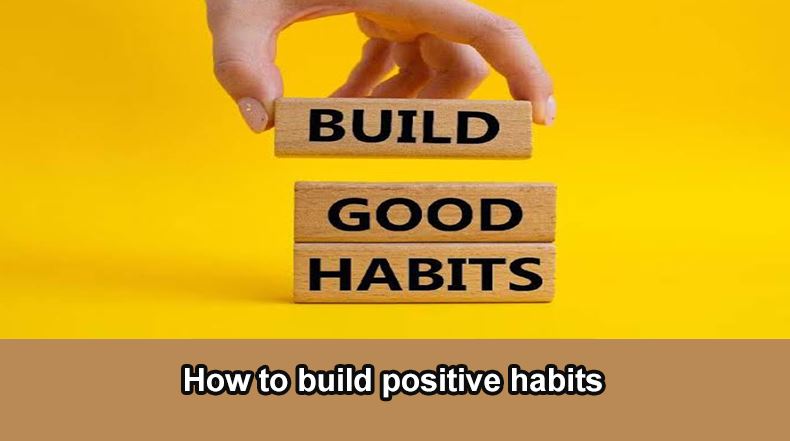
Transforming your life does not require massive, overnight overhauls or superhuman levels of willpower. Instead, the foundation of lasting personal and professional growth lies in understanding how to build positive habits incrementally. Every significant achievement is rarely the result of a single, monumental effort; rather, it is the natural byproduct of daily routines executed consistently over time. Many people struggle with implementing lasting changes because they rely heavily on fleeting motivation rather than relying on structured behavioral systems. By shifting the focus from the desired end goal to the daily systems that produce those results, anyone can rewire their brain to adopt constructive behaviors automatically. Mastering the art of habit formation is about making small, calculated adjustments to your daily life that compound into remarkable transformations over months and years.
Understanding the Psychology Behind Habit Formation
To effectively reshape your daily routines, it is essential to first understand the neurological mechanics of how behaviors become automatic. At the core of every routine is the habit loop, a three-step psychological pattern consisting of a cue, a routine, and a reward. The cue acts as the trigger that initiates the behavior, prompting the brain to enter automatic mode. This trigger can be a specific time of day, an emotional state, a location, or even the presence of certain people. Following the cue is the routine itself, which is the physical, mental, or emotional action you take. Finally, the loop concludes with a reward, which helps your brain evaluate whether this particular behavioral sequence is worth remembering for the future.
When you are learning how to build positive habits, optimizing the reward phase is critical because it stimulates the release of dopamine, a neurotransmitter associated with pleasure and learning. If a behavior is followed by a satisfying experience, your brain wires itself to crave that reward the next time it encounters the specific cue. Unfortunately, modern life is filled with instant-gratification triggers that hijack this system, making it incredibly easy to develop negative patterns like mindlessly scrolling through social media. Positive behaviors, such as exercising, studying, or eating well, often feature delayed gratification. This temporal gap makes them inherently more difficult for the brain to adopt initially without conscious effort, strategy, and self-awareness.
The ultimate goal of habit formation is to move a behavior from the prefrontal cortex, which handles conscious decision-making, to the basal ganglia, the brain region responsible for automatic behaviors. As you repeat the habit loop, the neural pathways associated with that specific sequence become stronger, insulated, and more efficient. Eventually, the conscious cognitive effort required to perform the action diminishes entirely. This biological transition explains why the early stages of adopting a new routine feel so mentally exhausting, yet the exact same actions feel entirely effortless months later. Recognizing this temporary cognitive friction prevents premature discouragement during the initial phases of behavioral change.
Starting Small to Achieve Lasting Behavioral Change
One of the most common mistakes individuals make when attempting to adopt better routines is trying to change too much too quickly. Driven by a sudden burst of motivation—often around the New Year or after a significant life event—people set incredibly ambitious goals, such as committing to two hours of intense daily exercise or completely overhauling their financial habits overnight. While high levels of motivation are excellent for starting a project, motivation is inherently an emotion, meaning it fluctuates wildly based on stress, fatigue, and external circumstances. When motivation inevitably dips, the sheer size of the new commitment becomes overwhelming, leading to procrastination, failure, and a sense of guilt that actively hinders future attempts.
The most reliable methodology for ensuring consistency is to scale down the desired behavior until it requires almost zero willpower to complete. These micro-habits, sometimes referred to as atomic habits, are actions so remarkably small that it is virtually impossible to fail at them. If your ultimate objective is to read a book every week, the foundational habit should not be reading fifty pages a day; rather, it should be reading just one single page every night before bed. If you want to build a consistent fitness routine, start by committing to doing two push-ups or walking for five minutes after dinner. By drastically reducing the barrier to entry, you eliminate the mental resistance and dread associated with starting a difficult task.
The psychological brilliance of starting exceptionally small lies in how it begins to shift your internal identity. Every time you successfully complete your micro-habit, you cast a vote for the type of person you are actively becoming. Reading one page may not drastically improve your intellect overnight, but it neurologically reinforces the identity of a reader. Over time, as this identity solidifies and the neural pathways strengthen, it becomes natural and intuitive to gradually increase the volume or intensity of the activity. This compounding effect is the true secret to long-term success; a behavior must be established and standardized before it can be improved or optimized.
Designing an Environment That Supports Success
Society heavily romanticizes willpower, promoting the idea that strong discipline is the sole requirement for overcoming bad routines and establishing good ones. However, psychological and behavioral research consistently shows that individuals with the highest levels of self-control actually use their willpower the least. Instead of constantly fighting daily temptations, they structure their physical and digital environments to make positive behaviors the path of least resistance. Learning how to build positive habits effectively requires accepting the reality that your external environment often dictates your behavior far more than your internal motivation ever could.
To optimize your surroundings, you must actively reduce the friction associated with the routines you want to adopt. Friction refers to the number of steps, the amount of time, or the physical effort required to begin a task. If you want to start a morning jogging routine, sleeping in your workout clothes and placing your running shoes directly next to your bed removes several critical points of friction. If you want to eat healthier, spending time on Sunday prepping nutritious meals ensures that healthy food is the absolute easiest and fastest option available when you come home exhausted after a long workday.
Conversely, you can strategically use the concept of friction to dismantle negative behaviors that continuously interfere with your growth. If you spend too much time watching television, unplug the screen and physically remove the batteries from the remote control after each use. If your smartphone is distracting you from deep work, place it in another room or utilize software applications that completely block access to distracting platforms during your peak productivity hours. By consciously increasing the number of steps required to execute a bad habit, you give your logical brain the crucial seconds it needs to override the automatic impulse.
The Impact of Visual Cues on Daily Routines
Visual cues play a disproportionately large role in shaping human behavior because a significant portion of the brain’s sensory cortex is entirely dedicated to processing visual information. If an object is out of sight, it is almost entirely out of mind. To ensure your new routines take root, you need to make the cues for your desired behaviors highly visible and unavoidable. Leaving a journal directly on your pillow, placing a guitar in the center of your living room, or keeping a filled water bottle directly next to your computer monitor serve as constant, silent reminders to engage in those specific activities. Designing a physical space that visually prompts positive action is a highly effective, passive strategy to maintain unwavering consistency.
Leveraging Habit Stacking to Anchor New Behaviors
One of the most effective and widely utilized strategies for embedding a new behavior into your daily life is a technique known as habit stacking. Rather than trying to pair a new routine with an arbitrary time or location—which can easily be disrupted by unexpected schedule changes—habit stacking involves directly pairing the new behavior with a routine you already perform reliably every single day. Your brain already possesses highly efficient neural networks built around established routines like brushing your teeth, pouring your morning coffee, or locking your front door. You can intentionally leverage the strength of these existing networks to anchor your new, desired behaviors.
The functional formula for habit stacking is incredibly straightforward and highly adaptable: “After I complete my current habit, I will immediately perform my new habit.” The existing habit naturally acts as the undeniable cue for the new behavior. For example, if you want to incorporate mindfulness into a chaotic schedule, you might create a stack that dictates, “After I pour my morning cup of coffee, I will meditate for two minutes.” If you want to improve your physical flexibility, your stack might dictate, “After I take off my work shoes in the evening, I will stretch my hamstrings for sixty seconds.” Because the initial trigger is an action you already execute without fail, the likelihood of forgetting to perform the subsequent behavior drops dramatically.
As you become more comfortable and proficient with this cognitive technique, you can begin chaining multiple behaviors together to create incredibly powerful morning or evening routines. A simple two-step stack can seamlessly evolve into a highly productive sequence: after pouring coffee, you meditate; after meditating, you write down three daily priorities; after writing priorities, you read an industry article for ten minutes. This cascading effect creates an undeniable behavioral momentum that carries you through highly productive sequences with absolute minimal cognitive effort. The key to sustaining this momentum is ensuring the initial anchor habit is something you genuinely do every single day, without exception.
Overcoming Setbacks and Maintaining Consistency
A pervasive myth in the self-improvement and wellness space is the idea that it takes exactly twenty-one days to form a new habit. In reality, behavioral science studies have conclusively demonstrated that the timeline for habit formation varies drastically depending on the complexity of the behavior and the individual’s lifestyle, ranging anywhere from eighteen days to over two hundred and fifty days. Believing in a strict twenty-one-day timeline often leads to unnecessary frustration when a behavior still requires conscious effort after a month of diligent practice. Understanding that building positive habits is a long-term neurological remodeling process helps cultivate the patience and grace necessary to see the transformation through to completion.
Setbacks, failures, and interruptions are an inevitable part of any behavioral change journey. Life becomes chaotic, personal emergencies arise, or mental exhaustion simply takes over, inevitably causing you to miss a day of your new routine. The defining factor that separates those who successfully adopt lifelong routines from those who fail is not the complete absence of mistakes, but rather the speed and efficiency of their recovery. Adopting a strict “never miss twice” philosophy ensures that a single slip-up remains an isolated incident rather than the beginning of a rapid downward spiral. If you miss a scheduled workout on Tuesday, you do not wait until the following Monday to start over; instead, you focus entirely your energy on perfectly executing the routine on Wednesday.
To maintain unbreakable consistency over the duration of a lifetime, your core motivation must eventually shift from the external outcome to your internal identity. Goal-oriented motivation—such as running a specific marathon or earning a certain salary—is incredibly fragile because once the goal is achieved or deemed too difficult, the underlying behavior immediately stops. True behavioral change is, at its core, identity change. The primary objective is not simply to read a book; the objective is to fundamentally become a reader. When your daily habits become a direct reflection of who you believe you are, rather than just tasks you force yourself to do, consistency is no longer a daily struggle but a natural, effortless expression of your core character.
Sustaining Lifelong Growth Through Positive Habits
Mastering how to build positive habits is an exercise in strategic lifestyle design rather than a brutal test of sheer willpower. By fundamentally deconstructing the neurological loop of cues, routines, and rewards, you can purposefully architect your day to heavily favor constructive actions. Starting with remarkably small, manageable steps removes the heavy mental resistance that usually sabotages grand ambitions, allowing you to build the undeniable momentum necessary for lasting change. Furthermore, physically reshaping your environment and strategically anchoring new behaviors to existing routines ensures that your daily life actively and continuously supports your personal growth initiatives.
Ultimately, an individual’s trajectory is determined by the specific systems they put in place rather than the intensity of their momentary aspirations. Achieving profound personal and professional transformations relies on the slow, methodical compounding of daily actions executed with unwavering consistency over years. As you deliberately focus on building positive habits that align directly with your core values, the heavy reliance on emotional motivation diminishes entirely, replaced by robust, automatic routines that naturally facilitate success. Prioritizing sustainable behavioral systems over temporary, outcome-driven goals remains the single most reliable strategy for engineering long-term excellence and holistic well-being.
How long does it actually take to form a new habit?
While the 21-day myth is popular, research shows it actually takes an average of 66 days for a new behavior to become completely automatic.
Why do I keep failing to stick to my new habits?
You are likely trying to change too much at once or relying purely on willpower instead of designing a supportive environment with clear daily triggers.
What is habit stacking and how do I use it?
Habit stacking is the highly effective method of tying a new desired behavior directly to an existing daily routine, like reading one page right after pouring your morning coffee.
How do I get back on track if I miss a day?
Show yourself some grace and adopt the “never miss twice” rule so that a single slip-up doesn’t snowball into abandoning your goal entirely.
Should I focus on breaking bad habits or building good ones first?
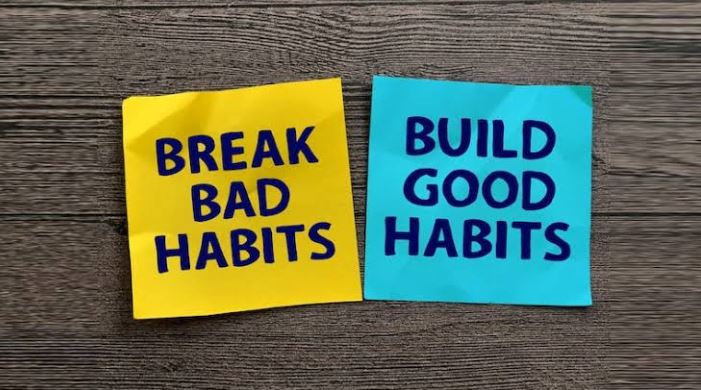
It is usually far more effective to replace a bad habit by actively building a positive one that naturally satisfies the same underlying psychological craving.
Please note
The content provided in this article is for educational and informational purposes only and should not be construed as medical, nutritional, or therapeutic advice. The recommendations provided may not be appropriate for everyone. The final decision regarding your health and lifestyle is yours, and we recommend that you consult with your doctor or other health professional before making any changes or taking any action.
-
Emotional Advantage
Original price was: €12.90.€8.90Current price is: €8.90. -
Healthy Life Blueprint
Original price was: €24.90.€15.90Current price is: €15.90. -
How to break negative habits
Original price was: €12.90.€6.90Current price is: €6.90.