
How to Treat Others Better

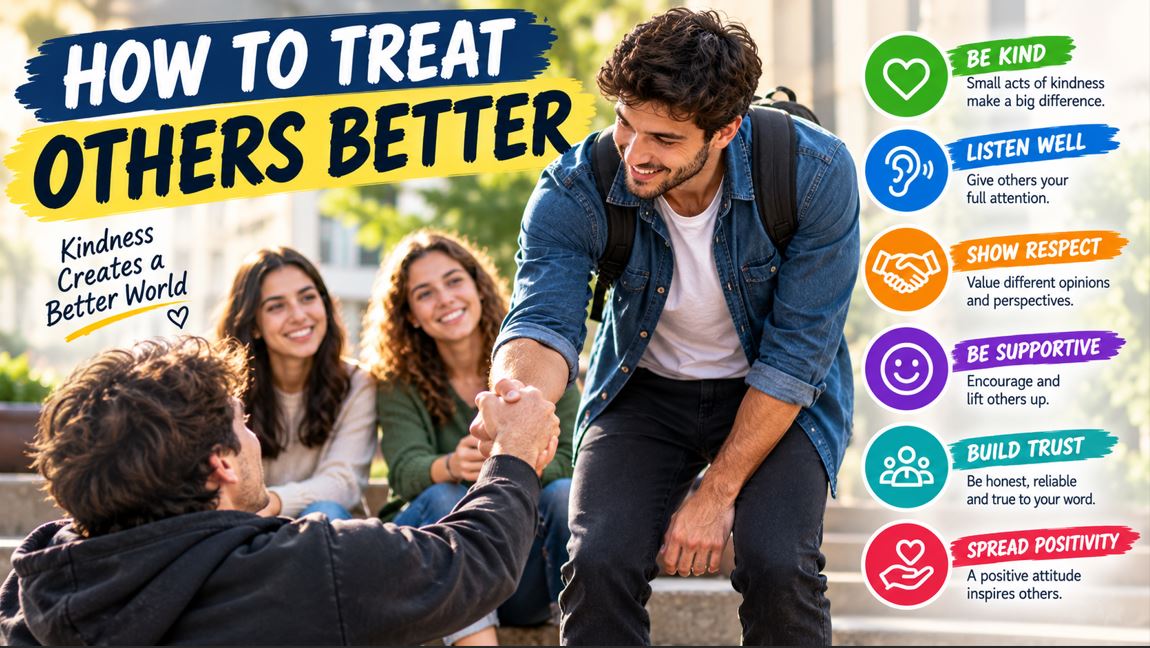
The way you treat other people can have a significant influence on your relationships, communication, workplace interactions, and overall quality of life. Treating others well does not require perfection or constant agreement. It means showing respect, empathy, patience, kindness, and consideration while recognizing that every person has different experiences, feelings, and perspectives.
Learning how to treat others better starts with becoming more aware of your words, actions, reactions, and assumptions. Small changes in the way you communicate and respond to people can gradually create stronger relationships and a more positive social environment. Understanding how to treat others better can also help you become a more respectful, trustworthy, and emotionally mature person.
Practice Active Listening
One of the simplest ways to treat people better is to become a better listener. Many conversations become frustrating because people are preparing their response instead of actually paying attention.
When someone is speaking, try to give them your full attention. Avoid interrupting unnecessarily, put distractions aside, and focus on understanding what they are trying to communicate.
Ask questions when clarification is needed and show that you are genuinely interested in what the other person has to say.
Show Respect in Everyday Interactions
Respect is a foundation of healthy relationships. Treat people with basic courtesy regardless of their position, profession, age, or background.
Use polite language, acknowledge other people’s contributions, and avoid deliberately embarrassing or humiliating someone.
Respect does not mean agreeing with everything another person says. You can disagree while still treating the person with dignity.
Think Before You Speak
Words can have a lasting effect. Before making a comment, especially during an emotional situation, consider whether what you are about to say is necessary, accurate, and respectful.
Taking a brief pause can help you avoid unnecessary insults, harsh criticism, or comments that you may later regret.
Learning how to treat others better often begins with improving the quality of your everyday communication.
Practice Empathy
Empathy means making an effort to understand another person’s feelings and perspective.
You do not need to experience exactly what someone else is experiencing to show empathy. Simply recognizing that another person may have different emotions, pressures, or challenges can change the way you respond.
Instead of immediately judging someone’s reaction, ask yourself what they might be experiencing.
Avoid Making Quick Judgments
People often make assumptions based on limited information. Someone who seems quiet may simply be tired or uncomfortable. Someone who makes a mistake may be dealing with a difficult situation that you know nothing about.
Try to gather more information before forming a strong judgment.
Being slower to judge can help you respond with greater fairness and understanding.
Be Patient With Other People
Everyone makes mistakes, communicates differently, and learns at a different pace. Patience can make a major difference in difficult situations.
If someone needs extra time to explain something or makes an understandable mistake, try to respond calmly instead of immediately showing frustration.
Patience does not mean accepting harmful behavior. It means giving ordinary situations enough space for people to correct themselves and improve.
Use Kind Words
Kindness does not require dramatic gestures. A genuine thank-you, encouraging comment, sincere compliment, or thoughtful message can make someone’s day better.
Try to acknowledge the efforts of other people rather than noticing only their mistakes.
Simple expressions of appreciation can strengthen relationships and create a more positive atmosphere.
Keep Your Promises
Trust is built through consistent actions. If you say you will do something, make a reasonable effort to follow through.
When you cannot keep a commitment, communicate honestly rather than disappearing or making excuses.
Reliability shows people that you respect their time and take your responsibilities seriously.
Respect Personal Boundaries
Healthy relationships require boundaries. Different people have different comfort levels regarding personal space, communication, privacy, time, and emotional topics.
Do not pressure someone to share information they are uncomfortable discussing. Respect their need for personal time and recognize when they want space.
At the same time, communicate your own boundaries clearly and respectfully.
Give Credit to Others
When someone helps you, contributes an idea, or does good work, acknowledge their contribution.
Giving credit demonstrates fairness and prevents people from feeling overlooked.
In professional settings, recognizing the work of colleagues can also strengthen teamwork and create a culture of mutual respect.
Help Without Expecting Something in Return
Offering reasonable help can strengthen relationships and create a sense of cooperation.
You can help by sharing useful information, assisting with a task, listening to someone, or offering encouragement.
Healthy generosity does not require keeping a constant record of what you have done for others. Help when you genuinely can, while still maintaining appropriate boundaries.
Learn to Apologize Sincerely
Everyone makes mistakes. What matters is how you respond after making one.
A sincere apology should acknowledge what happened without shifting all responsibility onto the other person. Avoid using apologies that are really excuses or attempts to dismiss someone’s feelings.
A simple acknowledgment of the mistake, combined with a genuine effort to do better, can help rebuild trust.
Accept That People Are Different
People have different personalities, values, communication styles, priorities, and life experiences.
Not every difference needs to become a conflict. You can accept that another person sees something differently without immediately trying to change their mind.
Learning to appreciate differences can make conversations more respectful and reduce unnecessary tension.
Control Your Anger
Strong emotions can make people say things they would not normally say. When you notice yourself becoming angry, create space before responding when possible.
Take a few slow breaths, step away briefly, or postpone the conversation until you are calmer.
Managing your reactions does not mean suppressing legitimate concerns. It means expressing those concerns in a way that is less likely to cause unnecessary harm.
Avoid Gossip
Gossip can damage trust and relationships. Repeating private information or speaking negatively about people who are not present can create unnecessary conflict.
Before sharing something about another person, consider whether you would say the same thing if they were standing beside you.
Choosing constructive conversation over gossip can create a more trustworthy social environment.
Give Constructive Feedback
Honest feedback can be helpful when it is delivered respectfully.
Focus on the behavior or situation rather than attacking the person’s character. Explain what happened, why it matters, and what could be improved.
Constructive feedback should help someone understand an issue rather than simply make them feel bad.
Celebrate Other People’s Success
You do not need to compete with everyone around you. When someone achieves something meaningful, allow yourself to recognize their accomplishment.
Congratulate them sincerely, ask about their experience, and show interest in their progress.
Supporting other people’s success can strengthen relationships and create a healthier attitude toward achievement.
Be Present With the People Around You
Giving someone your attention is a simple form of respect. Constantly checking your phone while another person is speaking can make them feel unimportant.
When having an important conversation, try to put distractions aside and be fully present.
Quality attention can sometimes be more valuable than lengthy conversations.
Treat Service Workers and Strangers With Respect
The way you treat people when you have no personal reason to impress them can reveal a great deal about your character.
Be patient and polite with service workers, employees, delivery drivers, customer-support staff, and strangers.
A respectful attitude should not depend on whether someone can provide you with a benefit.
Be Generous With Appreciation
People often notice criticism more quickly than appreciation. Make a habit of expressing gratitude when someone helps you, supports you, teaches you, or contributes something valuable.
Specific appreciation can be especially meaningful.
Instead of simply saying, “Thanks,” you might explain what you appreciated and how it helped you.
Be Honest Without Being Cruel
Honesty is important, but honesty does not require unnecessary harshness.
When sharing criticism or difficult information, consider the person’s feelings and choose your words carefully.
Ask yourself whether your goal is to help, clarify, or improve the situation—or simply to release your frustration.
Honesty combined with compassion is generally more constructive than bluntness without consideration.
Learn From Conflict
Disagreements are inevitable. Rather than trying to “win” every argument, focus on understanding the underlying issue.
Ask what each person actually needs, clarify misunderstandings, and look for practical solutions.
After a conflict, consider what you could have handled differently. Self-reflection can help you improve future interactions.
Do Not Expect Perfection From Others
Everyone has strengths and weaknesses. Expecting people to behave perfectly can create unnecessary disappointment.
Instead, pay attention to patterns and context. Hold appropriate standards while recognizing that occasional mistakes are normal.
Allowing reasonable room for imperfection can make relationships more flexible and realistic.
Treat Yourself Better Too
Treating others well becomes easier when you also develop healthy self-respect.
Constant self-criticism, exhaustion, and unrealistic expectations can make it harder to respond patiently to other people.
Take care of your own needs, establish boundaries, and recognize when you need rest.
Self-respect and consideration for others can support each other rather than being opposites.
Make Kindness a Daily Habit
You do not need to wait for major opportunities to become a better person. Look for small moments every day.
Listen carefully, say thank you, offer help, be patient in stressful situations, and communicate respectfully.
When these actions become habitual, treating people well becomes a natural part of your behavior rather than something you only remember occasionally.
Build Stronger Relationships Through Consistency
Trust and respect develop over time through repeated behavior. One kind conversation is valuable, but consistent kindness has a much greater impact.
Try to be dependable, respectful, honest, and considerate across different situations.
People are more likely to feel safe around someone whose behavior remains stable rather than changing dramatically depending on circumstances.
Conclusion
Learning how to treat others better is about developing everyday habits based on respect, empathy, patience, honesty, kindness, and consideration. Listen carefully, think before speaking, respect boundaries, control your reactions, keep your promises, and acknowledge the contributions of others.
You do not need to become perfect to improve your relationships. Small changes in the way you communicate and respond can make a meaningful difference over time.
Ultimately, how to treat others better comes down to remembering that every person has feelings, challenges, experiences, and a need for dignity. By practicing thoughtful communication and consistent respect, you can create healthier relationships and contribute to a more positive environment wherever you go.
What is the best way to treat other people?
Start with basic respect, active listening, empathy, patience, honesty, and kindness. Pay attention to how your words and actions affect others and make adjustments when necessary.
How can I become more respectful toward others?
Listen without unnecessarily interrupting, avoid insulting or humiliating people, respect personal boundaries, keep your commitments, and acknowledge that people can have different opinions and experiences.
How can I stop being impatient with people?
Notice the situations that trigger your impatience and create a brief pause before reacting. Slow breathing, stepping away temporarily, and reminding yourself that people have different circumstances can help you respond more calmly.
How should I treat someone who disagrees with me?
Listen to their reasoning, ask questions, and focus on the issue rather than attacking the person. You can strongly disagree while still communicating respectfully.
Why is empathy important when treating others better?
Empathy helps you consider another person’s feelings and perspective before reacting. It can reduce unnecessary judgment, improve communication, and make it easier to respond with understanding and respect.
please note
The content provided in this article is for educational and informational purposes only and should not be construed as medical, nutritional, psychological, or therapeutic advice. The advice provided may not be appropriate for everyone. The final decision regarding your health and lifestyle is yours, and we recommend that you consult with your doctor, counselor, or other health professional before making any changes or taking any action.
Shop new arrivals
-

Emotional Advantage
€0.00 -

Healthy Life Blueprint
€0.00 -
How to break negative habits
€0.00 -
How to have continuity
Original price was: €4.90.€0.00Current price is: €0.00. -
Living with Purpose
Original price was: €8.90.€0.00Current price is: €0.00.