mindfulness meditation

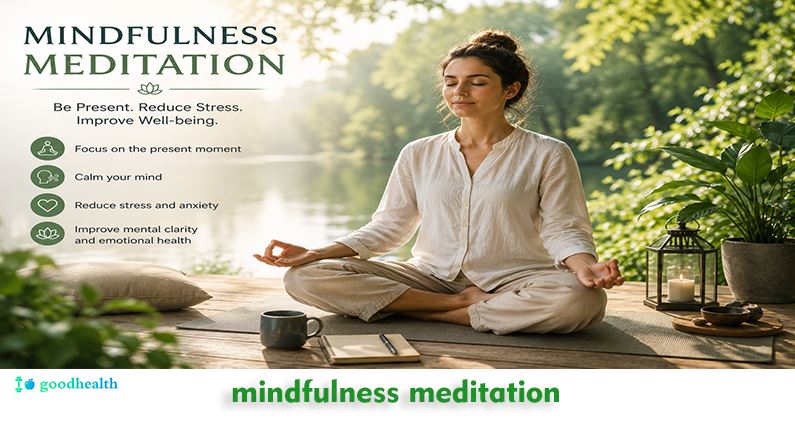
Mindfulness meditation has transitioned from an ancient spiritual tradition into a mainstream cornerstone of holistic well-being, mental health, and personal development. At its core, mindfulness meditation is the practice of anchoring your attention to the present moment without judgment. In a modern landscape characterized by constant digital distractions, endless notifications, and high-stress work environments, the ability to sit still and simply observe one’s internal state has become an essential survival skill rather than just a luxury. By consciously tuning into the present, individuals can fundamentally shift how they interact with their thoughts, emotions, and external surroundings.
The practice is not about emptying the mind or achieving a state of eternal bliss, which is a common misconception that often discourages beginners. Instead, it is a deliberate and active training of attention and awareness. When you engage in mindfulness meditation, you are essentially strengthening the cognitive muscles required to notice when your mind has wandered into anxieties about the future or regrets about the past. Returning that wandering attention to the present—usually by focusing on an anchor like the breath—is the actual work of meditation. Over time, this repetitive process cultivates a profound sense of mental clarity and emotional resilience.
Understanding the Core Principles of Mindfulness Meditation
To truly benefit from mindfulness meditation, it is essential to understand the foundational principles that guide the practice. The first principle is intentionality. Unlike daydreaming or simple relaxation, mindfulness requires a deliberate choice to focus your awareness on the current experience. This means actively choosing to pay attention to physical sensations, sounds in the environment, or the rhythm of your breathing. By setting this intention, you transition from a state of passive reaction to a state of active observation, which is the first step in reclaiming control over a busy mind.
The second core principle is non-judgment. Human beings are naturally wired to categorize experiences as good or bad, pleasant or unpleasant. During mindfulness meditation, you are encouraged to notice these evaluations and gently let them go. If you feel a physical ache or experience a sudden wave of anxiety, the goal is not to fix or suppress the sensation, but simply to acknowledge its presence. Practicing non-judgment creates a safe internal environment where difficult emotions can be processed without adding secondary layers of frustration or self-criticism.
Finally, the principle of beginner’s mind plays a crucial role in sustaining a long-term practice. Approaching each meditation session as if it were your very first prevents the process from becoming stale or routine. Even if you have been meditating for years, every single breath is a completely new event that has never happened before and will never happen again. Cultivating this sense of curiosity allows practitioners to remain deeply engaged with their inner landscape, discovering subtle nuances in their physical and mental states that they might otherwise overlook.
The Role of Breath Awareness
The breath serves as the most common anchor in mindfulness meditation because it is always present, naturally rhythmic, and happens without conscious effort. Focusing on the inhalation and exhalation provides a steady home base for a wandering mind. When a practitioner focuses on the physical sensation of air entering the nostrils and expanding the lungs, they ground themselves deeply in the physical body, interrupting spirals of abstract, anxious thought.
Furthermore, breath awareness directly influences the autonomic nervous system. Slow, deliberate breathing signals to the brain that the body is safe, activating the parasympathetic nervous system and reducing the production of stress hormones like cortisol. This physiological shift is why mindfulness meditation is so frequently recommended by healthcare professionals for managing chronic stress, high blood pressure, and anxiety disorders.
Observing Thoughts Without Attachment
A critical breakthrough in any mindfulness meditation practice occurs when an individual realizes they are not their thoughts. In standard waking consciousness, people closely identify with every idea or emotion that passes through their mind. Mindfulness introduces the concept of cognitive defusion, allowing practitioners to step back and watch their thoughts drift by like clouds across a sky or leaves floating down a stream.
This observation without attachment means that a stressful thought about an upcoming deadline does not have to trigger an immediate panic response. You notice the thought, recognize it as a temporary mental event, and choose whether or not to engage with it. This creates a powerful buffer between stimulus and response, empowering individuals to make intentional choices rather than simply reacting out of deeply ingrained conditioning.
The Scientific Impact on Brain Health and Stress
The rapid rise in the popularity of mindfulness meditation is heavily supported by decades of rigorous neuroscientific research. Functional magnetic resonance imaging (fMRI) studies have demonstrated that consistent meditation practice actually alters the physical structure of the brain, a phenomenon known as neuroplasticity. Specifically, regular mindfulness practice increases the gray matter density in the hippocampus, which is the region associated with memory, learning, and emotional regulation. This structural enhancement equips the brain to process information more efficiently and manage complex emotional states with greater ease.
Conversely, mindfulness meditation has been shown to decrease the size and reactivity of the amygdala, the brain’s primitive fear center responsible for the fight-or-flight response. When the amygdala is less reactive, individuals experience fewer spontaneous spikes in anxiety and are less likely to perceive ordinary daily challenges as mortal threats. This neurological down-regulation is incredibly valuable for professionals and creatives who need to maintain focus and composure in high-pressure situations, proving that meditation is not just about relaxation, but about cognitive optimization.
Beyond structural brain changes, mindfulness meditation dramatically improves executive functioning. The prefrontal cortex, responsible for decision-making, problem-solving, and impulse control, becomes more highly connected to other areas of the brain through sustained practice. This enhanced connectivity allows for better concentration, improved working memory, and a heightened ability to sustain attention on complex tasks. As a result, individuals who practice mindfulness frequently report higher productivity, deeper creative flow states, and a significantly reduced tendency to multitask or succumb to digital distractions.
Mindfulness as a Tool for Breaking Negative Habits
One of the most transformative applications of mindfulness meditation is its ability to dismantle deeply ingrained negative habits. Most detrimental behaviors—whether they involve unhealthy eating, procrastination, or doomscrolling on social media—operate on a neurological loop consisting of a trigger, a routine, and a reward. Because these loops function largely on autopilot, willpower alone is rarely enough to break them. Mindfulness intervenes by shining a spotlight of awareness onto the habit loop, bringing the unconscious process into the conscious mind where it can be actively managed.
When a practitioner cultivates present-moment awareness, they begin to notice the subtle physical and emotional cues that precede a negative habit. For example, before reaching for sugary comfort food or mindlessly opening a distracting app, there is usually an underlying sensation of stress, boredom, or discomfort. Mindfulness meditation teaches individuals to sit with that uncomfortable urge without immediately giving in to the craving. By observing the craving objectively, the practitioner discovers that the urge is temporary and will eventually peak and subside on its own.
This practice of observing rather than acting creates a critical wedge of space between the trigger and the habitual response. In that newfound space lies the freedom to make a healthier choice. Over time, as the individual repeatedly chooses a different action—or simply chooses inaction—the neural pathways that supported the negative habit begin to weaken and atrophy. Simultaneously, the intentional choices aligned with a healthy life become the new default pathways, completely rewiring the brain for positive behavior.
Integrating mindfulness into habit disruption also removes the toxic element of shame from personal development. When individuals relapse into negative behaviors, they often berate themselves, which generates more negative emotion and paradoxically triggers the bad habit again to soothe the emotional pain. The non-judgmental awareness cultivated on the meditation cushion teaches people to view slip-ups with self-compassion and objective curiosity, analyzing what triggered the behavior without taking it as a personal failure, thereby accelerating long-term behavioral change.
How to Build a Consistent Daily Practice
The most common barrier to experiencing the benefits of mindfulness meditation is the failure to establish a consistent, daily routine. Many people attempt to meditate for an hour on their first day, find it excruciatingly difficult, and abandon the practice entirely. The key to building a sustainable habit is to start remarkably small. Beginning with just three to five minutes a day lowers the barrier to entry and prevents the brain from perceiving the new habit as a burdensome chore. Consistency is vastly more important than duration in the early stages of establishing a healthy life routine.
Creating a dedicated physical space for practice can also significantly enhance consistency. This does not require an elaborate setup; a specific chair, a corner of the bedroom, or a dedicated cushion on the floor works perfectly well. By returning to the exact same spot every day, you leverage environmental cues to signal to your brain that it is time to transition into a state of focused awareness. Over time, simply sitting in that designated space will automatically trigger a relaxation response, making it easier to settle into the meditation.
Linking mindfulness meditation to an existing daily habit—a concept known as habit stacking—is another highly effective strategy for beginners. If you already have an ingrained morning routine, such as brewing a cup of coffee or brushing your teeth, you can insert your meditation practice immediately before or after that action. By anchoring the new behavior of mindfulness to an established anchor, you eliminate the need to rely on motivation or willpower to remember to practice, seamlessly weaving mental fitness into the fabric of your existing daily schedule.
Overcoming Common Roadblocks for Beginners
Even with a strong intention, beginners inevitably encounter roadblocks that can make mindfulness meditation feel frustrating. The most prevalent complaint is the experience of a “busy mind.” New practitioners often sit down, close their eyes, and are immediately bombarded by a chaotic stream of thoughts, leading them to conclude that they are somehow failing at meditation. It is vital to understand that recognizing a busy mind is actually a sign of progress. You are finally noticing the mental static that has always been there; you are simply no longer distracted enough to ignore it.
Physical discomfort is another frequent obstacle. Sitting still can highlight tension in the back, neck, or hips that you normally tune out throughout the day. While maintaining a dignified, upright posture is recommended to promote alertness, mindfulness meditation does not require you to endure severe pain. If a physical sensation becomes overwhelmingly distracting, the practice involves mindfully choosing to adjust your posture with intention, rather than shifting around unconsciously. Acknowledging the discomfort, making a deliberate adjustment, and returning to the breath represents a perfect cycle of mindfulness.
Finally, dealing with sleepiness or lethargy during practice can derail a meditation session. Because meditation involves stillness and closing the eyes, the body often misinterprets these signals as an invitation to fall asleep, especially if the practitioner is chronically sleep-deprived. To combat this, individuals can try meditating with their eyes slightly open and cast in a soft, unfocused gaze toward the floor. Additionally, practicing earlier in the day or engaging in mindful walking rather than seated meditation can keep the energy levels high enough to maintain clear, focused attention.
Integrating Mindfulness Into Everyday Life
While seated, formal practice is the training ground, the ultimate goal of mindfulness meditation is to carry that heightened awareness into everyday activities. Confining mindfulness to a cushion limits its transformative potential. True integration happens when you begin to apply present-moment awareness to the mundane tasks that normally trigger autopilot mode. Mindful eating, for example, transforms a rushed meal into a rich sensory experience. By slowing down to notice the texture, temperature, and flavor of each bite, you improve digestion, increase satisfaction, and naturally prevent overeating.
Routine chores provide excellent opportunities for informal mindfulness practice. Washing the dishes, folding laundry, or taking a shower are activities typically accompanied by heavy mental time travel, where the mind worries about the future or replays the past. By intentionally shifting your focus to the physical sensations of the warm water on your hands, the scent of the soap, or the texture of the fabric, you turn a tedious chore into a restorative mental break. This active grounding reduces daily fatigue and prevents stress from accumulating throughout the day.
Even interpersonal communication can be profoundly enhanced through applied mindfulness. Mindful listening requires giving another person your complete, undivided attention without mentally formulating your response while they are still speaking. This level of presence allows for deeper empathy, better conflict resolution, and stronger relationships in both personal and professional spheres. When you are fully present with another human being, they feel seen and validated, which is one of the most practical and rewarding external benefits of an internal meditation practice.
Sustaining a Mindful Lifestyle for Long-Term Well-Being
Mindfulness meditation is an evolving journey rather than a final destination to be reached. As practitioners deepen their commitment, the initial goals of stress reduction or improved focus often expand into a broader appreciation for the richness of daily life. The skills cultivated through deliberate attention, non-judgment, and emotional regulation compound over months and years, laying a resilient foundation for long-term psychological health and a deeply fulfilling existence.
Embracing this practice ensures that you remain an active participant in your own life, fully experiencing each moment rather than letting days blur together in a haze of distraction. By returning continually to the breath and prioritizing present-moment awareness, individuals possess a powerful, accessible tool to navigate the complexities of the modern world. Ultimately, cultivating a dedicated mindfulness meditation practice serves as an essential investment in cognitive longevity, emotional balance, and holistic well-being.
How many minutes a day should I meditate to see results?
Even just five to ten minutes of daily practice can significantly lower stress and improve your overall focus over time.
Can mindfulness meditation actually help with severe anxiety?
Yes, it teaches you to observe anxious thoughts without judgment, which helps break the continuous cycle of panic and overwhelm.
please note
The content provided in this article is for educational and informational purposes only and should not be construed as medical, nutritional, psychological, or therapeutic advice. The advice provided may not be appropriate for everyone. The final decision regarding your health and lifestyle is yours, and we recommend that you consult with your doctor, counselor, or other health professional before making any changes or taking any action.