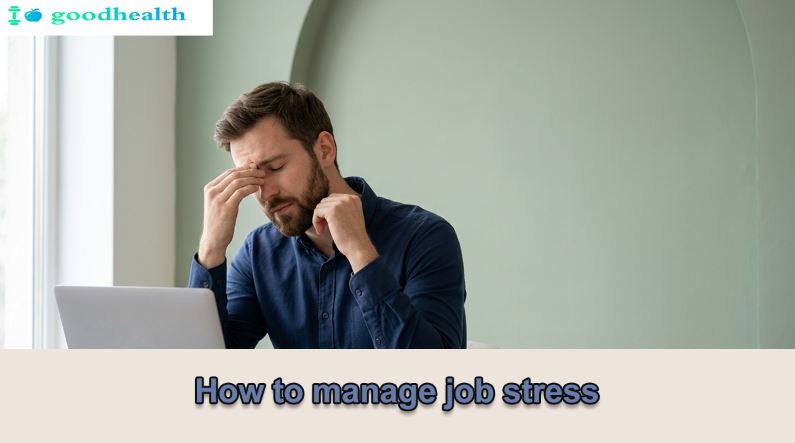
How to manage job stress

Everyday professionals face an invisible headwind that erodes productivity, diminishes creativity, and threatens long-term physical health: chronic occupational anxiety. In today’s hyper-connected, fast-paced corporate and remote landscapes, learning how to manage job stress is no longer a luxury reserved for wellness retreats; it is an essential professional competency. Left unaddressed, persistent tension can morph into severe workplace burnout, impairing decision-making, straining interpersonal dynamics, and diminishing overall quality of life. By understanding the underlying mechanics of professional pressure and applying targeted, evidence-based coping strategies, individuals can reclaim their cognitive clarity, protect their mental well-being, and build a resilient career trajectory.
Identifying the Root Causes of Workplace Stress
To effectively mitigate occupational tension, one must first isolate the systemic triggers that fuel it. Workplace stress rarely stems from a single isolated incident; rather, it accumulates from prolonged exposure to structural imbalances within a role. Unmanageable workloads, unrealistic deadlines, a pervasive lack of role clarity, and insufficient autonomy over one’s daily tasks are among the primary catalysts. When professionals feel trapped by high demands but possess low control over their execution, the psychological friction escalates rapidly.
Furthermore, a misalignment between personal values and corporate culture can create a profound, underlying sense of dissatisfaction. This disconnect often manifests when an organization prizes metrics over human well-being, or when the effort an employee invests fails to yield commensurate recognition, financial reward, or professional advancement. Identifying these specific organizational stressors is a mandatory first step, as it allows individuals to move away from vague feelings of overwhelm and toward targeted problem-solving.
It is equally important to distinguish between positive workplace tension, known as eustress, and destructive chronic stress. Eustress acts as a motivational force, sharpening focus and providing the energetic drive needed to meet an upcoming deadline or deliver an important presentation. Conversely, chronic distress is persistent, unyielding, and paralyzing. Understanding this boundary helps professionals recognize when their work environment has crossed from being healthily challenging to structurally harmful.
Recognizing the Biological and Behavioral Symptoms of Chronic Stress
The human body is highly attuned to psychological pressure, often signaling distress long before the conscious mind fully acknowledges it. When an individual experiences prolonged professional strain, the nervous system remains in a perpetual state of hyperarousal, flooded with cortisol and adrenaline. Physically, this biological state manifests as persistent fatigue that sleep fails to remedy, muscle tension localized in the neck and shoulders, frequent headaches, and gastrointestinal disturbances. Over time, ignoring these somatic indicators can weaken the immune response, leaving the individual susceptible to frequent illnesses.
On a cognitive and behavioral level, chronic occupational anxiety significantly alters how a person interacts with their environment. Early warning signs include a noticeable erosion of focus, difficulty making routine decisions, and a pervasive sense of mental fatigue. Emotionally, individuals may notice a shift toward cynicism, heightened irritability during minor professional friction, or a profound sense of detachment from tasks they once found fulfilling. These internal changes often lead to counterproductive behavioral adaptations, such as chronic procrastination, absenteeism, or a complete withdrawal from team collaborations.
Failing to intervene during these early symptomatic phases can lead to compounding long-term health crises. Prolonged exposure to unmitigated workplace stress is a known contributor to severe psychological conditions, including clinical anxiety and depressive disorders, as well as physical ailments like cardiovascular disease. Recognizing these symptoms not as personal failures, but as physiological distress signals, is vital for initiating timely, protective interventions.
Mastering Time Management to Mitigate Daily Overwhelm
A disorganized workflow is one of the most potent amplifiers of daily workplace anxiety, transforming an average workload into a perpetual state of emergency. When tasks are handled reactively rather than strategically, professionals experience a constant cognitive fragmentation known as attention residue. This occurs when the brain remains partially focused on a previous uncompleted task while attempting to execute a new one, ultimately increasing error rates and compounding the sensation of being buried under an inescapable mountain of work.
To counteract this chaotic pattern, professionals must adopt structured prioritization methodologies that restore a sense of agency. Categorizing daily responsibilities using an urgency-and-importance matrix allows individuals to visually separate critical, strategic objectives from minor, administrative distractions. By intentionally scheduling high-priority, cognitively demanding tasks during peak energy hours—typically in the morning—and reserving lower-energy periods for routine emails and administrative maintenance, workers can maximize their output while conserving mental bandwidth.
Additionally, realistic capacity planning requires a shift from idealistic scheduling to conservative, data-driven time estimation. Many professionals fall victim to the planning fallacy, consistently underestimating how long a project will take to complete. Building intentional buffer periods between meetings and allocating extra time for complex deliverables creates a psychological safety net, preventing the panic that inevitably arises when unexpected delays disrupt a rigid schedule.
Establishing Firm Boundaries in a Hyper-Connected Environment
The widespread adoption of digital communication platforms and remote work structures has fundamentally dissolved the physical barriers that historically separated professional life from personal recovery. Today, professionals carry their offices in their pockets, exposing them to a relentless stream of emails, direct messages, and project updates at all hours of the day. This constant connectivity deprives the brain of the true psychological detachment necessary to reset the nervous system and recover from cognitive exertion.
Cultivating a healthy work-life balance demands the implementation of strict, explicit boundaries around digital availability. This process begins with defining clear log-off rituals that signal a definitive end to the working day, such as closing all professional applications, organizing the physical desk space, and disabling work-related push notifications. Establishing dedicated, non-negotiable windows in the evening and over weekends where professional communication is completely paused allows the mind to shift from a state of hyper-vigilant monitoring to deep relaxation.
Enforcing these boundaries also requires transparent, assertive communication with colleagues and leadership. Professionals must proactively manage expectations by articulating their availability windows and framing these boundaries not as a lack of commitment, but as a strategy to preserve high-quality performance during standard working hours. When an organization understands that a well-rested employee produces superior, more accurate results, boundary setting transforms from a source of friction into a mutually beneficial protocol.
Developing Somatic and Cognitive Micro-Coping Mechanisms
While long-term structural changes are essential, professionals also require immediate, actionable interventions to manage acute spikes of stress that occur during the workday. When confronted with an unexpected crisis, a hostile meeting, or an abrupt shift in project direction, the body’s immediate survival instinct can impair logical reasoning. Implementing rapid somatic techniques can successfully interrupt this acute stress response, down-regulating the autonomic nervous system in real time.
One of the most efficient physiological interventions is controlled diaphragmatic breathing, which actively stimulates the vagus nerve to lower heart rate and reduce blood pressure. Deep, rhythmic breathing patterns can be discreetly executed at a desk or immediately before a high-stakes conversation, serving as an anchor to restore emotional equilibrium. Complementing this with grounding exercises, such as brief progressive muscle relaxation or shifting physical focus entirely to the immediate environment, prevents the mind from spiraling into worst-case scenarios.
Maximizing the Efficacy of Mindful Micro-Breaks
Integrating short, intentional intervals of detachment throughout the working day is a scientifically proven method to sustain cognitive endurance and prevent the accumulation of tension. Rather than working continuously through a state of exhaustion, individuals should utilize micro-breaks to step away from their screens entirely. A five-minute break spent stretching, walking, or engaging in a brief mindfulness exercise can effectively reset focus and clear mental clutter.
These brief interludes are most effective when they involve a complete shift in sensory input. For instance, practicing the 20-20-20 rule—looking at an object 20 feet away for at least 20 seconds every 20 minutes—alleviates ocular fatigue while encouraging a momentary mental pause. By treating these breaks as non-negotiable components of the professional schedule rather than guilty distractions, workers can insulate themselves against the steady buildup of daily cognitive exhaustion.
In tandem with physical resets, cognitive reframing techniques allow individuals to consciously alter their psychological response to workplace triggers. Stress is heavily influenced by the internal narrative applied to an event; interpreting an aggressive deadline as an existential threat triggers anxiety, whereas viewing it as a complex, bounded puzzle shifts the brain into a problem-solving mode. By challenging catastrophic thoughts and objectively assessing the realistic scope of a workplace challenge, professionals can drastically reduce the emotional toll of daily corporate friction.
Initiating Constructive Dialogues with Leadership and HR
A common barrier to effective occupational stress management is the fear that admitting to overwhelm will be interpreted as incompetence or a lack of resilience. Consequently, many employees suffer in silence, allowing their performance to deteriorate until burnout becomes visible through mistakes or absenteeism. Overcoming this hesitation is critical, as modifying an unsustainable professional environment almost always requires the cooperation of organizational leadership.
When initiating a conversation about workload or stress with a manager, the approach must be objective, data-driven, and solution-oriented. Rather than presenting the issue as an emotional grievance, the employee should compile a clear inventory of current projects, document the specific bottlenecks or competing priorities causing the strain, and propose realistic reallocations of tasks. Framing the discussion around optimizing the quality of key deliverables and protecting organizational output ensures that management views the conversation through a lens of operational efficiency.
In instances where immediate management is unresponsive or where the stress is tied to broader cultural issues, engaging with Human Resources or utilizing internal Employee Assistance Programs becomes necessary. Many modern organizations offer confidential counseling services, wellness stipends, and structural resources designed specifically to support mental well-being. Capitalizing on these institutional frameworks provides employees with professional advocacy and external guidance to navigate complex corporate stressors safely.
Cultivating Lifestyle Habits That Bolster Psychological Resilience
The capacity to withstand professional pressure is fundamentally anchored in an individual’s foundational health habits outside of office hours. A body starved of restorative sleep, adequate nutrition, and physical movement possesses a significantly lower threshold for psychological frustration. Sleep hygiene is particularly vital; chronic sleep deprivation impairs the prefrontal cortex, the area of the brain responsible for emotional regulation, logical reasoning, and impulse control, making minor workplace inconveniences feel catastrophic.
Regular cardiovascular exercise serves as a powerful, biological stress-unloader by actively metabolizing accumulated stress hormones while triggering the release of endorphins, which act as natural mood elevators. Even moderate daily activity, such as a brisk walk during a lunch break, can drastically lower overall baseline anxiety and improve cognitive resilience. Furthermore, maintaining a balanced diet rich in nutrient-dense foods stabilizes blood glucose levels, preventing the energetic crashes that exacerbate feelings of irritability and mental fatigue during high-pressure situations.
Equally protective is the deliberate cultivation of a rich personal identity completely independent of one’s professional title. When an individual’s entire sense of self-worth is tied exclusively to their career performance, a difficult day at work transforms into an existential crisis. Engaging deeply in creative hobbies, community activities, and nurturing robust social connections outside of the workplace provides a psychological sanctuary, reinforcing the reality that a career is merely one component of a meaningful life.
Evaluating Long-Term Career Alignment and Structural Changes
There are instances where workplace stress cannot be mitigated by time management, boundary setting, or lifestyle adjustments, because the toxicity or volume of demand is hardwired into the company’s business model or leadership style. When an environment consistently demands chronic overextension without regard for human limitations, professionals must objectively evaluate whether the role remains viable for their long-term health. Continuing to endure an inherently broken system will eventually exhaust even the most robust coping mechanisms.
Conducting a comprehensive career audit involves contrasting current professional realities against core personal values, financial requirements, and long-term well-being goals. If the audit reveals a permanent deficit—where the job consistently extracts more value from an individual’s health than it provides in compensation or fulfillment—planning a strategic departure becomes the most logical path forward. This realization should not be viewed as a defeat, but as a proactive, self-protective career decision.
Executing a healthy career transition requires deliberate, forward-looking planning to avoid replacing job stress with severe financial anxiety. Professionals should focus on updating their credentials, expanding their professional networks, and target-seeking organizations known for fostering supportive, psychologically safe workplace cultures. Taking structured control of one’s professional destiny in this manner immediately provides a psychological boost, transforming a feeling of helpless entrapment into one of purposeful autonomy.
Constructing a Sustainable Framework for Continuous Stress Mitigation
Managing job stress is not a temporary project with a definitive completion date; it is an ongoing, dynamic practice that requires continuous assessment and recalibration as professional landscapes evolve. The strategies that prove effective during one phase of a career may require adaptation as responsibilities grow, team dynamics shift, or personal life demands change. Cultivating long-term professional well-being requires a commitment to monitoring internal stress levels with the same rigor usually reserved for tracking corporate key performance indicators.
By systematically integrating structured time management, unwavering digital boundaries, immediate somatic resets, and open institutional communication, professionals can successfully insulate their mental health from corporate pressures. True professional success is fundamentally unsustainable if it comes at the expense of psychological and physical integrity. Prioritizing well-being does not detract from ambition; rather, it provides the steady emotional foundation and cognitive endurance required to achieve meaningful, long-term career growth.
How do I stop thinking about work when I get home?
Creating a simple end-of-day ritual, like taking a walk or writing down tomorrow’s to-do list, signals your brain that it’s time to fully disconnect.
What is the quickest way to calm down from severe work anxiety?
Stepping away from your desk for just five minutes to practice deep, slow breathing can instantly lower your heart rate and reset your focus.
How do I know if I am just stressed or actually experiencing burnout?
While stress feels like having too much to handle, burnout leaves you feeling completely empty, unmotivated, and physically exhausted every single day.
Should I tell my manager that I am feeling overwhelmed?
Yes, but approach the conversation by presenting a few realistic solutions or asking for help prioritizing your current workload.
How can I say no to extra tasks without looking bad?
Politely explain your current commitments and ask which existing projects should be paused to accommodate the new request.
Please note
The content provided in this article is for educational and informational purposes only and should not be construed as medical, nutritional, or therapeutic advice. The recommendations provided may not be appropriate for everyone. The final decision regarding your health and lifestyle is yours, and we recommend that you consult with your doctor or other health professional before making any changes or taking any action.