How to exercise at home without equipment

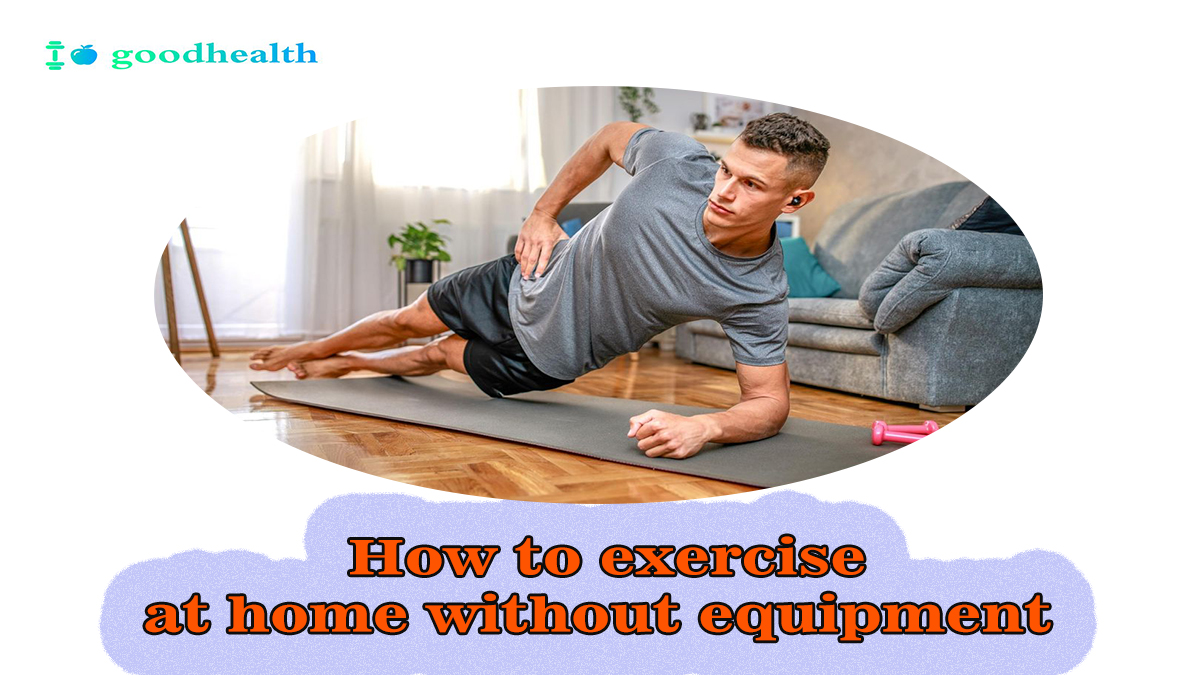
Starting a fitness journey or maintaining an active lifestyle does not require an expensive gym membership or a room filled with specialized gear. Learning how to exercise at home without equipment is one of the most liberating and sustainable ways to build physical strength, improve cardiovascular health, and enhance mental well-being. By leveraging your own body weight and understanding the principles of functional movement, you can create highly effective workout routines right in your living room. This comprehensive guide breaks down the science of bodyweight training, explores the best exercises for every fitness level, and provides practical strategies to keep you consistent and motivated.
The Foundations of Bodyweight Training
To get the most out of your home workouts, it helps to understand how calisthenics—the technical term for bodyweight training—works. Without physical weights like dumbbells or barbells, your primary source of resistance is gravity. By altering your body position, leverage, and tempo, you can increase or decrease the difficulty of any movement to match your current physical capabilities.
This approach to fitness targets foundational movement patterns that directly translate to everyday life, such as pushing, pulling, squatting, and hinging. Because bodyweight movements require multiple joint complexes to work in harmony, they naturally build core stability and enhance intermuscular coordination. Instead of isolating single muscles, you train your entire body to function as a cohesive, efficient system.
Another significant advantage of training without equipment is the minimal risk of acute joint injury compared to heavy weightlifting. Your joints and connective tissues adapt naturally to moving your own mass, which promotes functional longevity. Whether your goal is fat loss, muscle definition, or general cardiovascular conditioning, mastering your own body weight provides a rock-solid foundation for lifetime fitness.
Mastering Upper Body Pushing Movements
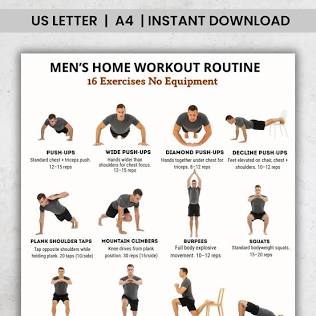
Building upper body strength at home relies heavily on variations of the classic push-up. This versatile movement primarily targets the chest, anterior deltoids, and triceps, while demanding significant isometric contraction from your core and quads to maintain a rigid spinal alignment.
If a standard floor push-up feels too intense, you can easily scale the movement by elevating your hands. Placing your hands on a sturdy wall, kitchen counter, or the back of a couch changes the angle of your body relative to gravity, reducing the percentage of body weight you have to push. As your strength increases, you can gradually transition to lower surfaces until you are performing flat push-ups on the floor.
Progressing to Advanced Variations
For those who find standard push-ups manageable, increasing the physical challenge involves shifting your leverage. Decline push-ups, where your feet are elevated on a chair or bed and your hands are on the floor, shift the resistance toward your upper chest and shoulders.
Another excellent tool for building shoulder power is the pike push-up. By walking your feet forward and lifting your hips into an inverted ‘V’ shape, you mimic the mechanics of an overhead press. Lowering your head toward the floor at an angle forces your shoulders to bear the brunt of your body weight, paving the way toward advanced skills like handstand push-ups.
Creative Solutions for Upper Body Pulling
One of the most common challenges people face when learning how to exercise at home without equipment is targeting the pulling muscles, specifically the latissimus dorsi, rhomboids, and rear deltoids. Without a pull-up bar or a set of resistance bands, finding ways to pull can require a bit of creativity, but it is entirely achievable using standard household items.
A highly effective exercise for the upper back is the bodyweight doorway row. By standing in a doorway, gripping the frame with your fingers, placing your feet close to the base of the wall, and leaning back, you can pull your chest toward the frame. You can adjust the intensity by shifting your foot placement closer to or further from the doorway to alter the angle of your lean.
Utilizing Floor and Table Layouts
Another approach involves performing sliding floor rows. By lying on your stomach on a smooth floor surface, placing a towel under your hands or forearms, and actively driving your elbows down toward your hips, you can pull your torso forward across the floor. This movement creates intense engagement across the entire upper back, mimicking the mechanics of a traditional latpull-down machine.
If you have a heavy, solid dining table, you can perform inverted rows by lying underneath it, gripping the edge of the table with an underhand or overhand grip, and pulling your chest up toward the underside. It is absolutely crucial to ensure the table is structurally stable and will not tip over before attempting this variation.
Building Lower Body Power and Stability
The muscle groups in your legs are the largest in your body, meaning lower body training is highly efficient for burning calories and boosting your metabolic rate. Squats form the cornerstone of any lower body home workout routine, focusing on the quadriceps, glutes, and hamstrings.
To perform a proper bodyweight squat, stand with your feet shoulder-width apart, track your knees in line with your toes, and lower your hips as if sitting back into a chair. Maintaining a proud chest and keeping your weight distributed across your entire foot ensures optimal muscle recruitment and protects your knee joints from unnecessary stress.
Unilateral Training for Progressive Overload
Because your legs are accustomed to carrying your body weight around all day, standard squats can eventually become too easy. To continue making progress without adding external weight, you should incorporate unilateral training, which means working one leg at a time.
Lunges—whether stepping forward, backward, or laterally—instantly double the load on the working leg while challenging your balance and core stability. To progress even further, the Bulgarian split squat involves elevating your rear foot on a couch or chair while performing a deep single-leg squat with the front leg. This variation places intense focus on the quadriceps and glutes, offering an exceptional strength stimulus without needing a single weight plate.
Strengthening the Posterior Chain
While squats and lunges do an excellent job of targeting the front of the legs, ensuring a balanced physique requires dedicated attention to the posterior chain, which includes the glutes, hamstrings, and lower back. Neglecting these areas can lead to muscular imbalances and posture issues, especially if you spend long hours sitting at a desk.
The glute bridge is an exceptional, low-impact exercise to activate the posterior chain. Lying on your back with your knees bent and feet flat on the floor, you drive through your heels to lift your hips toward the ceiling until your body forms a straight line from your shoulders to your knees. Squeezing your glutes at the peak of the movement ensures maximum muscle fiber recruitment.
To increase the difficulty, transition to a single-leg glute bridge by extending one leg straight out into the air while the other drives into the floor. You can also target the hamstrings specifically by walking your feet a few inches further away from your body, which alters the leverage and forces the back of your thighs to work significantly harder to stabilize your pelvis.
Core Conditioning and Spinal Stability
A strong core is about far more than just aesthetics; it acts as the central pillar of support for your entire skeletal structure. Traditional sit-ups often over-activate the hip flexors and put unnecessary strain on the lower spine, which is why modern home workouts prioritize isometric stability and rotational control.
The standard forearm plank is the ultimate foundational movement for core development. By maintaining a straight line from your head to your heels, tucking your pelvis slightly, and actively squeezing your glutes and abdominals, you train your core to resist spinal extension.
Dynamic Core Progressions
Once you can comfortably hold a solid plank for sixty seconds, you can introduce dynamic movements to challenge your stability further. Shoulder taps involve holding a high plank position on your hands and slowly alternating tapping each shoulder with the opposite hand, forcing your core to eliminate any side-to-side rocking of the hips.
Deadbugs and bird-dogs are additional phenomenal exercises that teach your core to stabilize the spine while your limbs are in motion. These movements require coordination and slow, deliberate control, which directly transfers to improved posture and reduced lower back discomfort during daily activities.
Cardiovascular Conditioning without Running
You do not need a treadmill or an open running track to improve your cardiovascular fitness and build endurance. High-intensity bodyweight movements performed in a circuit format can elevate your heart rate rapidly, providing an excellent aerobic and anaerobic workout in a tight space.
Burpees are widely regarded as the ultimate full-body conditioning exercise because they combine a squat, a push-up, and an explosive jump into one continuous fluid motion. If full burpees are too intense, they can be modified by stepping back into a plank rather than jumping, and omitting the push-up entirely until your stamina improves.
Other exceptional cardio movements include mountain climbers, jumping jacks, and high knees. By structuring these exercises into a High-Intensity Interval Training (HIIT) format—such as working for forty seconds followed by twenty seconds of rest—you can create a highly efficient cardiovascular workout that takes less than twenty minutes to complete.
Structuring Your Home Workout Routine
Knowing the exercises is only half the battle; organizing them into a structured program is what delivers long-term results. For most people training at home without equipment, a full-body routine performed three to four times a week is highly effective. This layout ensures every major muscle group is stimulated frequently while allowing adequate time for muscular recovery between sessions.
A well-rounded circuit might consist of five movements: an upper-body push, an upper-body pull, a lower-body quad-dominant movement, a posterior chain movement, and a core exercise. Move from one exercise to the next with minimal rest, then take a two-minute break at the end of the circuit, repeating the entire loop three to four times.
As your physical fitness improves, you can easily progress the routine by increasing the total number of repetitions, reducing the rest intervals between movements, or shifting to more advanced exercise variations. Tracking your workouts in a simple notebook or on your phone provides clear data on your progress, keeping you focused and moving forward.
Overcoming Consistency Roadblocks at Home
The greatest obstacle to working out at home is rarely a lack of information; it is the abundance of distractions. When your gym is also your living room, it can be incredibly easy to let chores, television, or general procrastination get in the way of your scheduled sweat session.
To counter this, establish a dedicated workout space, even if it is just a specific corner of your bedroom or a cleared area in front of the TV. Associating that physical space with exercise helps prime your mind for focus the moment you step into it. Additionally, scheduling your workouts at the exact same time each day builds a powerful psychological habit, transforming exercise from a daily negotiation into a non-negotiable part of your routine.
Treating your home sessions with the exact same respect you would give an appointment with a personal trainer changes your mindset entirely. Lay out your workout clothes the night before, eliminate digital distractions by silencing your phone, and play an energetic playlist to set a focused atmosphere. Consistency is built on eliminating friction, and a well-defined home routine removes the friction of travel and packing bags completely.
Embracing home fitness removes every common barrier to entry, proving that a healthy, strong, and capable body requires nothing more than consistency and your own physical effort. By mastering the core bodyweight movements, progressively challenging your muscles, and maintaining a regular training schedule, you can achieve elite levels of physical fitness without ever stepping foot inside a traditional gym environment.
Can you actually build muscle working out at home without weights?
Yes, using bodyweight exercises like push-ups and squats creates enough resistance to effectively build muscle if you progressively increase the difficulty.
What are the best no-equipment exercises for beginners?
Beginners should start with foundational movements like modified push-ups, bodyweight squats, lunges, planks, and glute bridges to build strength safely.
Is a 20-minute bodyweight workout enough to see results?
A highly focused 20-minute HIIT or circuit routine can be incredibly effective for improving fitness and burning fat if you keep the intensity high.
How can I get good cardio indoors without a treadmill or bike?
You can easily elevate your heart rate indoors by combining jumping jacks, burpees, high knees, and mountain climbers into a fast-paced circuit.
How often should I do a no-equipment home workout each week?
Aim for three to five days a week, ensuring you give your muscles at least one or two rest days to recover and grow.
Please note
The content provided in this article is for educational and informational purposes only and should not be construed as medical, nutritional, or therapeutic advice. The recommendations provided may not be appropriate for everyone. The final decision regarding your health and lifestyle is yours, and we recommend that you consult with your doctor or other health professional before making any changes or taking any action.